
## About the Destination

Germany, officially the Federal Republic of Germany, is a country located in Central Europe. It is the second-most populous country in Europe after Russia, and the most populous member state of the European Union. Germany is a federal parliamentary republic comprising sixteen states, and its capital and largest city is Berlin. With an estimated population of over 84 million people, Germany is a diverse and populous nation.

Germany's history is rich and complex, stretching back millennia. From the Germanic tribes of antiquity to the Holy Roman Empire, the unification under Prussia, and its tumultuous 20th-century experiences, Germany has profoundly shaped European history. An interesting historical tidbit is that the concept of the modern nation-state as we know it owes a great deal to the processes of state-building in the German lands during the 19th century. Today, it stands as a leading economic and political power in Europe.

The country's strategic location in Central Europe makes it a gateway to other major European destinations. Major cities like Munich are well-connected. For instance, Munich is approximately 580 kilometers (360 miles) from Berlin by car, a journey that takes around 6 hours. It's about 115 kilometers (70 miles) from Salzburg, Austria, a trip of roughly 1.5 hours. For those coming from further afield, Munich Airport (MUC) is a major international hub, with direct flights connecting to countless global cities.

The general atmosphere in Germany can be described as orderly, efficient, and often reserved, at least on the surface. The culture values punctuality, directness, and a strong sense of personal responsibility. While Germans might appear reserved initially, they are often deeply principled and value sincere connections once established. The climate varies significantly across the country, with warmer summers and colder, often snowy winters, particularly in the southern regions. The diverse landscapes, from the North Sea coast to the Bavarian Alps, contribute to a varied urban and rural character. You'll find bustling, modern metropolises alongside quaint, historic towns, each with its own unique charm.

Germany is a compelling destination for many, especially those seeking stability, economic opportunity, and a high quality of life. It offers a robust social welfare system, excellent public transportation, and a strong emphasis on education and innovation. For expatriates, particularly those from non-EU countries, Germany represents a chance to integrate into a prosperous and well-organized society, offering both professional growth and a distinct European living experience. The blend of rich history, modern infrastructure, and a culture that, while sometimes perceived as stern, is fundamentally built on respect and fairness, makes Germany a place that rewards thoughtful engagement and perseverance.

## Places to Visit

Germany boasts a wealth of attractions, from world-renowned landmarks to hidden gems. For those seeking a truly immersive experience, exploring beyond the most famous sights reveals the country's diverse appeal.

### Marienplatz (Munich)

**Marienplatz** ([Google Maps](https://www.google.com/maps/search/Marienplatz+Munich)) is the heart of Munich, a vibrant public square that has served as the city's main gathering point for centuries. Dominated by the stunning Neo-Gothic New Town Hall (Neues Rathaus), the square is most famous for its **Glockenspiel**, a marvel of clockwork animation that performs daily at 11 am, 12 pm, and 5 pm (seasonal). The show depicts historical Munich events, including a knight's tournament and a joyful wedding. Surrounding the square are other significant buildings, including the Old Town Hall (Altes Rathaus) and the Mariensäule (St. Mary's Column), a prominent landmark dedicated to the Virgin Mary.

*Our visit to Marienplatz was a highlight of our time in Munich. We made sure to be there for the 11 am Glockenspiel show. It's incredible to watch the figures move and hear the chimes – it truly transports you back in time. Even with the crowds, there's a magical quality to it. Afterward, we enjoyed a stroll around the square, taking in the intricate architecture and soaking up the lively atmosphere. The scent of gingerbread and roasted almonds from nearby stalls added to the festive feel.*

The best time to visit is during the day to witness the Glockenspiel. For a less crowded experience, aim for the earlier shows on a weekday. Admission to the square is free, but climbing the tower of St. Peter's Church nearby offers panoramic views of the square and the city.

### Neuschwanstein Castle

**Neuschwanstein Castle** ([Google Maps](https://www.google.com/maps/search/Neuschwanstein+Castle+Bavaria)) is a fairytale vision perched on a rugged hill above Hohenschwangau village in southwest Bavaria. Commissioned by King Ludwig II of Bavaria as a retreat and a tribute to Richard Wagner, the castle was intended as a personal homage to romanticism and a picturesque escape from reality. Its design, inspired by medieval knights' castles, has captivated imaginations worldwide and famously served as the inspiration for Walt Disney's Sleeping Beauty Castle.

Visitors can explore the opulent interiors, including the Throne Room (which was never completed), the Singers' Hall, and Ludwig II's surprisingly modest bedroom. The castle offers breathtaking views of the surrounding Alpine landscape. Due to its immense popularity, it's essential to book tickets in advance, ideally weeks or even months ahead, especially during peak season. Guided tours are available and highly recommended to understand the history and significance of each room.

*Standing before Neuschwanstein Castle was a moment of pure awe. It looks exactly like the postcards, but somehow even more magical in person. We took the guided tour, and our guide was fantastic, sharing fascinating anecdotes about King Ludwig II and the castle's construction. The views from the castle grounds, especially from the Marienbrücke (Mary's Bridge), are simply spectacular – a must-do for any photographer!*

Opening hours vary seasonally, but generally, it's open from 9 am to 6 pm in summer and 9 am to 5 pm in winter. Tickets can be purchased online through the official castle website or in person at the Hohenschwangau Ticket Center. Be prepared for a significant amount of walking and uphill climbs.

### Füssen Old Town

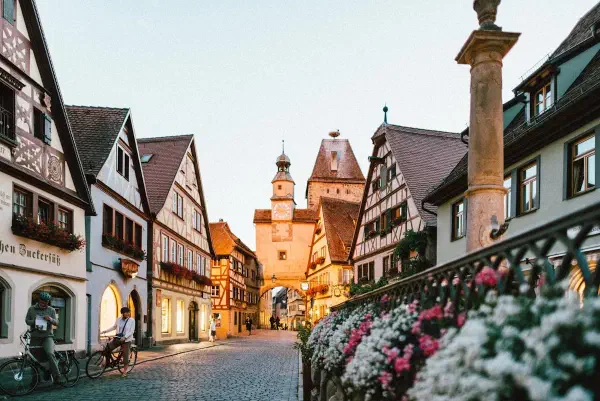
**Füssen Old Town** ([Google Maps](https://www.google.com/maps/search/Füssen+Old+Town+Bavaria)) is a charming medieval town located at the southern end of the Romantic Road in Bavaria, just a stone's throw from the iconic Neuschwanstein Castle. Its picturesque cobblestone streets, colorful burgher houses, and the imposing Imperial Castle of Füssen (Hohes Schloss) create an idyllic setting. The town's history dates back to Roman times, evident in its layout and some remaining structures. Füssen offers a more relaxed pace compared to the grandeur of its nearby castles, providing a delightful contrast.

Exploring the town on foot is the best way to discover its hidden courtyards and quaint shops. Don't miss the **Lechfall**, a beautiful waterfall on the River Lech, and the historic **Hohes Schloss**, which now houses a branch of the Bavarian National Gallery. The **Parish Church of St. Mang** is also worth a visit for its impressive Baroque architecture.

*After the grandeur of Neuschwanstein, wandering through Füssen's old town felt like stepping into a storybook. We loved the relaxed atmosphere, enjoying a coffee and cake at a local cafe while watching the world go by. The views from the Imperial Castle were lovely, and the church interior was surprisingly ornate. It's a perfect place to unwind and experience authentic Bavarian life.*

The town is accessible throughout the day, with shops and cafes generally open from morning to early evening.

### Lindau Island

**Lindau Island** ([Google Maps](https://www.google.com/maps/search/Lindau+Island+Lake+Constance)) is a jewel situated on the eastern shore of Lake Constance (Bodensee), a vast freshwater lake bordering Germany, Austria, and Switzerland. This historic island town offers a unique blend of Mediterranean flair and Bavarian charm. Its origins trace back to the medieval period when it served as a significant trading post. The island is renowned for its stunning waterfront promenade, its picturesque harbor entrance guarded by a lion statue and a lighthouse, and its beautifully preserved old town.

Visitors can explore the **Old Town Hall**, the **Mangturm (Mang Tower)** lighthouse, and the **New Castle (Neues Schloss)**. A leisurely stroll along the **Promenade** offers magnificent views of the lake and the Alps in the distance. Boat trips on Lake Constance are a popular activity, allowing exploration of nearby lakeside towns and countries.

*Lindau Island truly felt like a holiday destination. The moment we arrived, the sparkling blue of Lake Constance and the colorful buildings of the old town took our breath away. We spent hours just walking along the harbor, enjoying the fresh air and the stunning vistas. The lighthouse at the entrance to the harbor is iconic, and we loved watching the boats come and go.*

The island is accessible year-round, with most attractions and shops open during daylight hours.

### Augsburg

**Augsburg** ([Google Maps](https://www.google.com/maps/search/Augsburg+Germany)) is one of Germany's oldest cities, founded by the Romans in 15 BC. Located in Bavaria, approximately 70 kilometers (43 miles) northwest of Munich, it boasts a rich history as a major center of trade, art, and science during the Renaissance, particularly under the wealthy Fugger merchant family. This legacy is visible in its well-preserved Renaissance architecture and its groundbreaking social housing project, the **Fuggerei**, the world's oldest social housing complex still in operation.

Key sights include the magnificent **Augsburg Cathedral (Dom Mariä Heimsuchung)**, the **Rathaus (Town Hall)** with its stunning Golden Hall (Goldener Saal), and the **Fuggerei** itself. Wandering through the charming streets, you can admire the numerous fountains and canals that crisscross the city. Augsburg also has a significant industrial heritage, notably in textiles and engineering.

*Augsburg surprised us with its historical depth. The Fuggerei was particularly fascinating – to think that people have lived there for over 500 years at nominal rent is incredible. The Golden Hall in the Rathaus is absolutely breathtaking; the sheer opulence and artistry are astounding. It’s a city that doesn’t shout its beauty but reveals it with quiet confidence.*

The city is easily explorable on foot or via its efficient public transport system.

### Memmingen

**Memmingen** ([Google Maps](https://www.google.com/maps/search/Memmingen+Germany)) is a historic free imperial city located in Swabia, Bavaria, about 110 kilometers (70 miles) west of Munich. With roots dating back to the 12th century, it flourished as a center for trade and crafts. Memmingen retains a remarkably well-preserved medieval old town, characterized by its charming market squares, ancient city walls, and distinctive stepped-gable houses. It’s often overlooked by tourists rushing to more famous destinations, making it a peaceful discovery.

Highlights include the **Marktplatz (Market Square)**, flanked by beautiful civic buildings, the **Stadthalle Memmingen**, and the **Großes Tor (Great Gate)**, a significant part of the old fortifications. The town's atmosphere is laid-back and authentic, offering a glimpse into everyday German life.

*Memmingen felt like a hidden gem. We enjoyed a quiet afternoon exploring its peaceful streets, admiring the unique architecture. It’s the kind of place where you can truly relax and soak in the local ambiance without the hustle and bustle of larger cities. The market square was lovely, with some charming cafes.*

The town is best explored on foot.

### Ingolstadt

**Ingolstadt** ([Google Maps](https://www.google.com/maps/search/Ingolstadt+Germany)) is a dynamic city situated on the Danube River in Upper Bavaria, roughly 90 kilometers (56 miles) north of Munich. Historically, it was the ducal residence of Bavaria and later a vital fortress town. Today, Ingolstadt is globally recognized as the headquarters of Audi AG, a testament to its modern industrial prowess. However, the city also preserves a rich historical core, including impressive fortifications and significant cultural landmarks.

Key attractions include the **New Castle (Neues Schloss)**, a former ducal residence with Baroque architecture, the **Kreuztor (Cross Gate)**, an iconic medieval city gate, and the **Asamkirche**, a stunning Baroque church. The **German Beer Purity Law (Reinheitsgebot) of 1516** was proclaimed in Ingolstadt, making it a historically significant site for beer lovers. The city also offers excellent museums, including the **Audi Forum**.

*Ingolstadt offers an interesting mix of old and new. We were impressed by the well-maintained medieval fortifications, especially the Kreuztor, which stands proudly as a symbol of the city's past. Of course, a visit to the Audi Forum was a must for car enthusiasts, showcasing the brand's innovation and history. It’s a city that balances its heritage with its modern identity very well.*

## Where to Eat

German cuisine is hearty, comforting, and often regional. From traditional Bavarian fare to international influences, there's something for every palate.

| Dish                  | Description                                                                          | Approximate Price (EUR) |
| :-------------------- | :----------------------------------------------------------------------------------- | :---------------------- |
| **Schweinshaxe**      | Roasted pork knuckle, crispy on the outside, tender and juicy inside.                | 15-20                   |
| **Käsespätzle**       | Egg noodles mixed with cheese and topped with crispy fried onions.                   | 10-15                   |
| **Bratwurst**         | Grilled pork sausage, often served with mustard and a bread roll or sauerkraut.      | 5-8                     |
| **Schnitzel (Wiener)**| Thinly pounded, breaded, and pan-fried veal or pork cutlet, often served with lemon.| 14-18                   |
| **Apfelstrudel**      | Warm apple strudel, typically served with vanilla sauce or whipped cream.            | 5-7                     |
| **Pretzel (Brezel)**  | Soft, oven-baked bread pretzel, often sprinkled with salt.                           | 1-3                     |

Here are a few recommended places to experience these flavors:

1.  **Hofbräuhaus München** ([Google Maps](https://www.google.com/maps/search/Hofbräuhaus+München))
    *   **Type:** Traditional Bavarian Beer Hall & Restaurant
    *   **Price Range:** €15-€25 per main dish
    *   **Why Recommend:** An iconic Munich institution, Hofbräuhaus offers an authentic Bavarian experience with live music, traditional food, and a vast selection of beers. It's lively, bustling, and a must-visit for a taste of Bavarian culture. They serve all the classics like Schweinshaxe and massive pretzels.

2.  **Augustiner-Keller** ([Google Maps](https://www.google.com/maps/search/Augustiner-Keller+Munich))
    *   **Type:** Traditional Bavarian Restaurant & Beer Garden
    *   **Price Range:** €14-€19 per main dish
    *   **Why Recommend:** One of Munich's oldest beer gardens and restaurants, Augustiner-Keller offers delicious, authentic Bavarian cuisine in a charming setting, both indoors and in its sprawling beer garden. It's a local favorite known for its quality food and excellent Augustiner beer.

3.  **Viktualienmarkt Stalls** (Munich)
    *   **Type:** Various Food Stalls (ranging from casual to gourmet)
    *   **Price Range:** €5-€15 per item
    *   **Why Recommend:** This vibrant outdoor market is a foodie paradise. You can find everything from fresh produce and local cheeses to ready-to-eat meals like sausages, fish sandwiches, and international street food. It's a fantastic place for a casual lunch or to sample a variety of local delicacies.

4.  **Gasthof zum Hirschen** (Füssen)
    *   **Type:** Traditional Bavarian Inn
    *   **Price Range:** €13-€18 per main dish
    *   **Why Recommend:** Located in the heart of Füssen, this cozy gasthof serves up delicious regional specialties in a warm, inviting atmosphere. It's a great spot to try local game dishes or classic Bavarian fare after exploring the town.

5.  **Café del Sol** (Augsburg)
    *   **Type:** Modern Café/Bistro
    *   **Price Range:** €10-€16 per main dish
    *   **Why Recommend:** While not strictly traditional, Café del Sol offers a more contemporary dining experience with a mix of German and international dishes, including salads, pasta, and burgers. It's a good option for a lighter meal or a coffee break with good views, especially if located near a scenic spot.

## Accommodation

Germany offers a wide range of accommodation options, from budget-friendly hostels to luxurious hotels, catering to every traveler's needs and preferences.

1.  **Budget:**
    *   **Wombat's City Hostel Munich Hauptbahnhof** ([Google Maps](https://www.google.com/maps/search/Wombat's+City+Hostel+Munich+Hauptbahnhof) | [Booking.com](https://www.booking.com/search.html?ss=Wombat's+City+Hostel+Munich+Hauptbahnhof))
        *   **Region:** Near Munich Hauptbahnhof (Main Train Station)
        *   **EUR/night:** €25-€50 (dormitory bed)
        *   **Description:** A popular and well-regarded hostel known for its clean facilities, friendly atmosphere, and convenient location. Offers dorms and private rooms. Ideal for solo travelers or those on a tight budget.

2.  **Mid-Range:**
    *   **Hotel am Markt (Füssen)** ([Google Maps](https://www.google.com/maps/search/Hotel+am+Markt+Füssen) | [Booking.com](https://www.booking.com/search.html?ss=Hotel+am+Markt+Füssen))
        *   **Region:** Füssen Old Town
        *   **EUR/night:** €90-€150
        *   **Description:** Centrally located in Füssen's historic center, this hotel offers comfortable rooms and a charming ambiance. It's perfect for those who want to be immersed in the town's atmosphere and have easy access to attractions.

3.  **Mid-Range/Upper Mid-Range:**
    *   **Hotel-Gasthof zum Hirschen (Lindau)** ([Google Maps](https://www.google.com/maps/search/Hotel-Gasthof+zum+Hirschen+Lindau) | [Booking.com](https://www.booking.com/search.html?ss=Hotel-Gasthof+zum+Hirschen+Lindau))
        *   **Region:** Lindau Island
        *   **EUR/night:** €100-€180
        *   **Description:** A traditional inn on Lindau Island, offering well-appointed rooms and excellent local cuisine. Its location provides easy access to the lake promenade and the historic town center.

4.  **Luxury:**
    *   **Hotel Vier Jahreszeiten Kempinski München** ([Google Maps](https://www.google.com/maps/search/Hotel+Vier+Jahreszeiten+Kempinski+München) | [Booking.com](https://www.booking.com/search.html?ss=Hotel+Vier+Jahreszeiten+Kempinski+München))
        *   **Region:** Munich City Center (Maximilianstraße)
        *   **EUR/night:** €350+
        *   **Description:** A prestigious five-star hotel offering opulent rooms, exceptional service, and a prime location on Munich's premier shopping street. Ideal for those seeking a luxurious and pampering stay.

**Which region to stay in?**

For exploring Bavaria and its fairytale castles, staying in **Munich** or a nearby town like **Augsburg** or even closer to the castles in **Füssen** offers strategic advantages. Munich is a major transport hub, making day trips feasible. Füssen itself is ideal if you want to be right at the doorstep of Neuschwanstein and Hohenschwangau. For lakeside charm, **Lindau Island** is unparalleled. Consider your primary interests: history and culture (Augsburg, Memmingen), fairytale castles (Füssen), or vibrant city life and major transport links (Munich).

## Getting There & Getting Around

Germany is exceptionally well-connected, making travel both domestically and internationally relatively straightforward.

| Mode of Transport | From            | To                 | Approximate Duration | Approximate Cost (EUR) | Notes                                                                                             |
| :---------------- | :-------------- | :----------------- | :------------------- | :--------------------- | :------------------------------------------------------------------------------------------------ |
| **Flight**        | Istanbul        | Munich (MUC)       | ~2.5 hours           | €100-€250 (round trip) | Frequent flights from major airlines like Turkish Airlines, Pegasus, Lufthansa.                   |
| **Flight**        | Frankfurt (FRA) | Munich (MUC)       | ~1 hour              | €70-€150 (round trip)  | Many domestic and international flights connect through Frankfurt.                                |
| **Train**         | Vienna          | Munich             | ~4 hours             | €40-€80                | Deutsche Bahn (DB) and Austrian Railways (ÖBB) offer regular connections.                         |
| **Train**         | Zurich          | Munich             | ~4 hours             | €50-€100               | Scenic routes available. Book in advance for better prices.                                       |
| **Bus**           | Prague          | Munich             | ~5-6 hours           | €25-€40                | Companies like FlixBus offer budget-friendly options.                                             |
| **Bus**           | Salzburg        | Munich             | ~1.5-2 hours         | €15-€25                | Frequent and convenient for shorter inter-city travel.                                            |

**Deutschlandticket:** Yes, the Deutschlandticket (€49 per month) is valid on all local and regional public transport (RE, RB, S-Bahn, U-Bahn, Trams, Buses) throughout Germany. It is an excellent value for day trips and within-city travel. It is *not* valid on high-speed trains like ICE, IC, or EC.

**Getting Around within Cities:**
*   **Public Transport:** German cities generally have excellent public transport systems, including U-Bahn (subway), S-Bahn (suburban trains), trams, and buses. Tickets can be purchased at stations or via mobile apps. The Deutschlandticket is a great option for unlimited travel on these networks.
*   **Walking:** Most historic city centers are very walkable and best explored on foot to discover hidden alleys and charming squares.
*   **Cycling:** Cycling is very popular in Germany. Many cities have dedicated bike lanes and bike rental services, making it a healthy and efficient way to get around.
*   **Taxis/Ride-Sharing:** Available in most cities, though generally more expensive than public transport.

## Our Experience

My journey through Germany, particularly focusing on the Bavarian region and its rich cultural tapestry, has been a profound exploration of contrasts and continuities. Having previously experienced life in bustling cities like Istanbul and navigated the nuances of expat life in places like the Netherlands, Germany presented a unique set of challenges and rewards.

One of the most striking aspects is the **sheer efficiency and orderliness** of German life. Public transport runs on time with astonishing regularity. The infrastructure, from roads to public spaces, is meticulously maintained. This predictability is incredibly reassuring, especially when navigating a new country. I recall a particular instance in Munich, arriving at the Hauptbahnhof minutes before my regional train to Augsburg was due to depart. The seamless transition from the S-Bahn to the platform, the clear signage, and the punctual departure of the train made what could have been a stressful moment feel effortless.

However, this efficiency can sometimes translate into a perceived **reservedness** among the locals. While not unfriendly, the initial interactions might feel less effusive than what I was accustomed to in Turkey. Building deeper connections requires consistent effort and genuine interest. I found that making an effort to speak German, even if imperfectly, went a long way. A simple "Guten Tag" and a smile opened doors, fostering warmer exchanges. My attempts to communicate in German at a small bakery in Füssen, for example, led to a delightful conversation with the owner about local pastries, far beyond a transactional exchange.

The **historical depth** of cities like Augsburg and the fairytale allure of Neuschwanstein Castle are truly captivating. Walking through the Fuggerei in Augsburg felt like stepping into a living museum, a tangible connection to centuries of social history. Similarly, the majestic presence of Neuschwanstein, despite the crowds, evokes a sense of wonder and romanticism. My visit to the Marienbrücke overlooking Neuschwanstein offered a perspective that photos simply cannot capture – the sheer scale and beauty of the landscape are breathtaking.

One area where the cultural differences are particularly pronounced is in social interactions and food. The prevalence of pork in everyday German cuisine required constant vigilance in reading labels, a habit that quickly became second nature. While Germany has a significant Turkish and Muslim community, especially in larger cities like Munich, experiencing Ramadan here is vastly different from back home. There isn't the widespread public acknowledgement or the collective atmosphere that characterizes the holy month in Turkey. This can sometimes lead to a subtle feeling of disconnect, a reminder of the cultural distance.

For families, Germany offers excellent childcare facilities (**Kita system** - [Childcare and the Kita System: Turkey vs Germany](https://lebeninsider.com/en/germany/living/kita-childcare-turkey-vs-germany/)) and a strong emphasis on education. However, navigating the language barrier with young children in educational settings initially required patience and proactive engagement with teachers.

Overall, my experience in Germany has been one of continuous learning and adaptation. It's a country that rewards those who are willing to understand its nuances, respect its rules, and embrace its unique culture. The country's commitment to sustainability and its robust infrastructure contribute significantly to a high quality of life. The opportunity to explore diverse regions, from the Bavarian Alps to charming lakeside towns, has been incredibly enriching.

This journey has further deepened my appreciation for the **Turkey vs Germany** comparisons I've explored in other articles ([Turkey vs Germany: An Honest Comparison After Making the Move](https://lebeninsider.com/en/germany/living/turkey-vs-germany/)). While Germany offers stability and opportunity, the warmth and familial connections of Turkish culture remain a cherished part of my identity. The key is finding a balance, integrating without losing oneself, and appreciating the distinct strengths of both worlds. My experiences in Germany have also highlighted the importance of exploring other parts of Europe, drawing parallels with my travels in places like the **Netherlands** ([Working and Living in the Netherlands: What I Learned Before Moving](https://lebeninsider.com/en/germany/expat/eu-series-01-netherlands/)) and **Luxembourg** ([Working and Living in Luxembourg: Europe's Best Kept Secret?](https://lebeninsider.com/en/germany/expat/eu-series-02-luxembourg/)), understanding how each country offers a different facet of the European experience.

## Frequently Asked Questions

**1. Is it difficult to integrate as a Turkish Muslim in Germany?**
Integration varies greatly depending on the region and individual efforts. Germany has a large and established Turkish community, particularly in cities like Munich. While there are legal protections against discrimination, cultural differences exist, and stereotypes can be encountered. Being open, learning the language, and respecting German societal norms are key to a smoother integration process.

**2. What is the general attitude towards Muslims in Germany?**
Attitudes are diverse. While Germany is a secular country with a constitutionally guaranteed freedom of religion, public discourse on Islam can sometimes be polarized. Many Germans are accepting and curious, while others may hold reservations or stereotypes. The younger generation tends to be more open and less prone to prejudice.

**3. Is it easy to find Halal food and mosques in Germany?**
Yes, especially in larger cities and areas with significant Turkish or Muslim populations. You'll find numerous halal butchers, Turkish supermarkets, and restaurants serving halal meat. Major cities also have a good number of mosques catering to various Islamic denominations.

**4. How safe is Germany for tourists and expats?**
Germany is generally a very safe country with low crime rates. Like any major European country, petty crime such as pickpocketing can occur in crowded tourist areas, so it's always advisable to be aware of your surroundings. Violent crime is rare.

**5. What is the best time of year to visit the Bavarian region?**
The best times to visit are late spring (May-June) for pleasant weather and blooming landscapes, and early autumn (September-October) for beautiful fall colors and harvest festivals. Summer (July-August) is popular but can be crowded and hotter. Winter (December-February) offers charming Christmas markets but can be cold and snowy, perfect for winter sports.

**6. How important is speaking German for daily life and work?**
While many Germans, especially in larger cities and business environments, speak English, learning German is highly beneficial for daily life and career advancement. It facilitates social integration, makes administrative tasks easier, and opens up more job opportunities, particularly outside international companies. The **language barrier** can be a significant hurdle if not addressed ([The Language Barrier: Turkey vs Germany](https://lebeninsider.com/en/germany/living/language-barrier-turkey-vs-germany/)).

**7. Can I drive in Germany with a Turkish or Bulgarian license?**
For Turkish citizens, a Turkish license is generally valid for the first six months of residency. After that, an exchange or re-examination might be required. For Bulgarian (EU) licenses, they are typically valid indefinitely for residents. Always check the latest regulations with the local driving license authority (Führerscheinstelle), as rules can change ([Can You Drive in Germany with a Bulgarian License? | Turkish→Bulgarian Transfer Reality (2026)](https://lebeninsider.com/en/germany/expat/bulgarian-license-valid-in-germany/) and [Driving License Exchange in Germany | The Reality of Turkish & Bulgarian Licenses](https://lebeninsider.com/en/germany/expat/driving-license-renewal-germany/)).
- LebenInsider/
- Germany/
- Living in Germany/
- Being Turkish and Muslim in Germany: What It Is Actually Like/
Being Turkish and Muslim in Germany: What It Is Actually Like
Related


Food and Eating Out: Turkey vs Germany
15 mins·
loading

Health System: Turkey vs Germany
10 mins·
loading