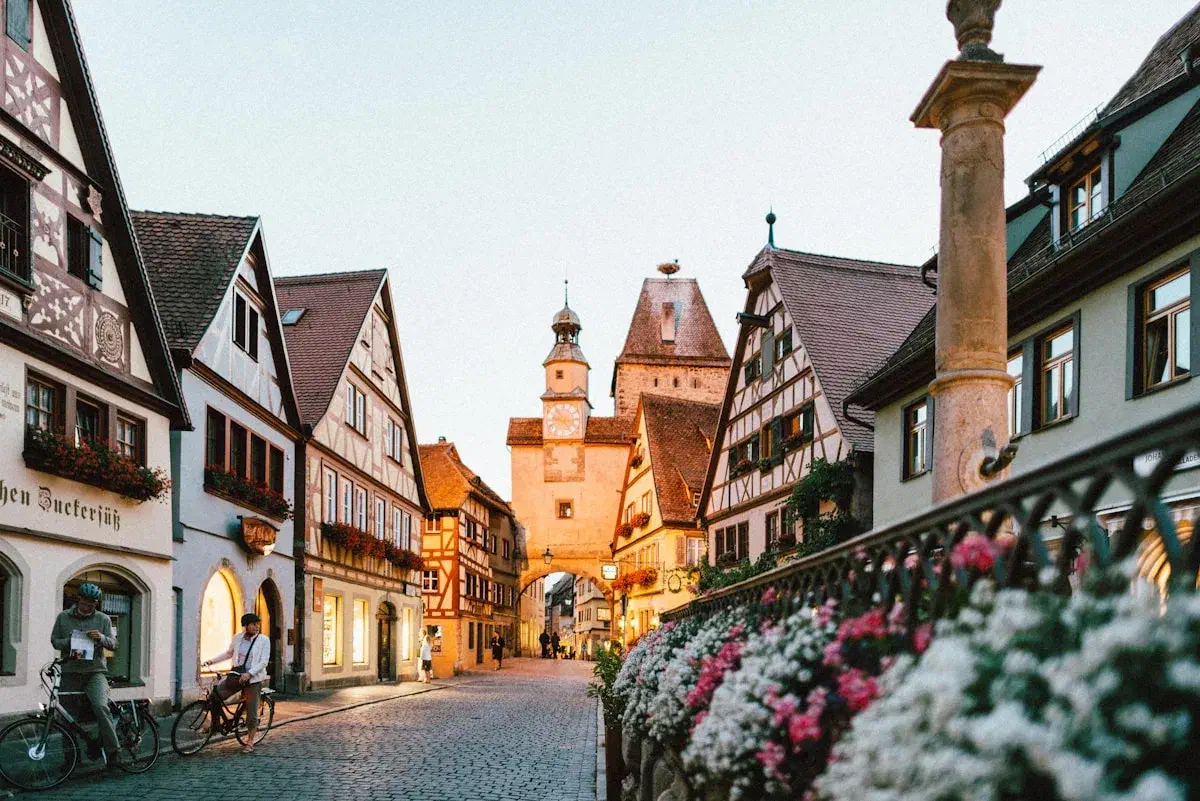
## About the Destination

Germany, a land of rich history, diverse landscapes, and a strong economy, is a prominent destination for expats and travelers alike. Situated in the heart of Europe, it shares borders with nine other countries: Denmark to the north, Poland and the Czech Republic to the east, Austria and Switzerland to the south, and France, Luxembourg, Belgium, and the Netherlands to the west. Its population stands at approximately 83 million people, making it the most populous member state of the European Union.

Germany's history is a tapestry woven with threads of empires, wars, division, and reunification. From the Holy Roman Empire to the Prussian dominance, the tumultuous 20th century marked by two World Wars and the subsequent division into East and West Germany, the nation's journey culminated in the joyous reunification in 1990. This complex past has shaped a society that values stability, order, and a profound respect for democratic principles.

Key German cities like Berlin, the vibrant capital, are roughly 600 km (370 miles) and about a 6-hour drive from Munich. Frankfurt, a major financial hub, is approximately 400 km (250 miles) and a 4-hour drive away. Istanbul, a gateway between Europe and Asia, is a significant international connection, though further afield.

The character of Germany is a fascinating blend of efficiency and deep-rooted traditions. You'll find meticulously organized cities, where public transport runs like clockwork and infrastructure is second to none. Yet, beneath this veneer of order lies a strong sense of community, a deep appreciation for nature, and a quiet, often understated, sense of humor. The atmosphere can be described as pragmatic and disciplined, but also surprisingly warm and welcoming once you break through the initial reserve. Germans value punctuality, honesty, and directness in communication. The "German mindset" often involves a thorough approach to tasks, a love for planning, and a strong work ethic. You'll encounter people who are generally reserved initially but are incredibly reliable and helpful once you get to know them.

Germany is a country that invites exploration, not just through its historical sites and natural beauty, but also through its societal norms and way of life. It's a place where efficiency meets a surprisingly strong sense of collective responsibility. For those seeking a stable environment, excellent career opportunities, a high quality of life, and a culture that values order and respect, Germany offers a compelling experience. It's a destination that challenges preconceptions and rewards those who take the time to understand its unique charm and the intricate workings of its society.

## Places to Visit

Germany, with its long history and diverse regions, offers a plethora of attractions catering to every interest. From majestic castles and picturesque medieval towns to bustling metropolises and serene natural landscapes, there's always something new to discover.

### Berlin

The vibrant capital of Germany, Berlin, is a city that pulses with history, art, and an undeniable modern energy. It's a place where you can walk through centuries of change in a single afternoon. From the remnants of the Berlin Wall to the grandeur of Brandenburg Gate, history is palpable everywhere. The city is also a hub for world-class museums, a thriving nightlife, and a diverse culinary scene.

**Brandenburg Gate** ([Google Maps](https://www.google.com/maps/search/Brandenburg+Gate+Berlin))
A neoclassical monument and one of Germany's most famous landmarks, the Brandenburg Gate stands as a symbol of peace and unity. It was built in the late 18th century and has witnessed pivotal moments in German history. Visiting it at dawn or dusk offers a particularly magical experience, with fewer crowds and stunning light.

**Reichstag Building** ([Google Maps](https://www.google.com/maps/search/Reichstag+Building+Berlin))
Home to the German Parliament, the Reichstag Building is an architectural marvel. Its modern glass dome offers panoramic views of the city and symbolizes transparency in government. Booking a visit in advance is highly recommended, as tours are free but limited.

**East Side Gallery** ([Google Maps](https://www.google.com/maps/search/East+Side+Gallery+Berlin))
This open-air gallery is a section of the former Berlin Wall, transformed into a canvas for over 100 artists from around the world. It stands as a powerful testament to freedom and resilience, with its vibrant murals offering a stark contrast to the grim history of the wall.

**Museum Island** ([Google Maps](https://www.google.com/maps/search/Museum+Island+Berlin))
A UNESCO World Heritage site, Museum Island is home to five world-renowned museums, including the Pergamon Museum and the Neues Museum, which houses the iconic bust of Nefertiti. It's a paradise for art and history enthusiasts.

**Tiergarten** ([Google Maps](https://www.google.com/maps/search/Tiergarten+Berlin))
Berlin's largest and most popular park, Tiergarten is a vast green oasis perfect for a leisurely stroll, a picnic, or cycling. It's a place where locals and tourists alike can escape the urban bustle.

**Memorial to the Murdered Jews of Europe** ([Google Maps](https://www.google.com/maps/search/Memorial+to+the+Murdered+Jews+of+Europe+Berlin))
This striking memorial consists of over 2,700 concrete slabs of varying heights arranged in a grid pattern. It's a deeply moving and somber space designed to provoke reflection on the atrocities of the Holocaust.

**Checkpoint Charlie** ([Google Maps](https://www.google.com/maps/search/Checkpoint+Charlie+Berlin))
Once the most famous crossing point between East and West Berlin during the Cold War, Checkpoint Charlie is now a historical site with a museum dedicated to the division of the city.

**Alexanderplatz** ([Google Maps](https://www.google.com/maps/search/Alexanderplatz+Berlin))
A bustling public square and transport hub in the center of Berlin, Alexanderplatz is known for the Fernsehturm (TV Tower), offering breathtaking views, and its vibrant atmosphere with shops and cafes.

**Potsdamer Platz** ([Google Maps](https://www.google.com/maps/search/Potsdamer+Platz+Berlin))
This area, once a no-man's-land, has been redeveloped into a modern hub of culture, entertainment, and business, showcasing striking contemporary architecture.

**Charlottenburg Palace** ([Google Maps](https://www.google.com/maps/search/Charlottenburg+Palace+Berlin))
A magnificent Baroque palace, Charlottenburg offers a glimpse into the royal past of Prussia, with its opulent interiors and beautiful gardens.

**GDR Museum** ([Google Maps](https://www.google.com/maps/search/GDR+Museum+Berlin))
An interactive museum that allows visitors to experience daily life in the former German Democratic Republic (East Germany) through immersive exhibits.

**Tempelhofer Feld** ([Google Maps](https://www.google.com/maps/search/Tempelhofer+Feld+Berlin))
The former Tempelhof Airport has been transformed into a vast public park, offering immense open spaces for recreational activities, from cycling and skating to kite flying.

### Munich

Munich, the capital of Bavaria, is renowned for its charming blend of historic architecture, vibrant beer gardens, and proximity to the majestic Alps. It's a city that exudes a friendly and prosperous atmosphere, with a deep respect for tradition.

**Marienplatz** ([Google Maps](https://www.google.com/maps/search/Marienplatz+Munich))
The central square of Munich, Marienplatz is the heart of the city, featuring the stunning New Town Hall (Neues Rathaus) with its famous Glockenspiel. The Glockenspiel performs daily, recounting historical events with animated figures. We visited during the midday show, and it was a delightful spectacle that charmed both us and the children.

**Frauenkirche** ([Google Maps](https://www.google.com/maps/search/Frauenkirche+Munich))
These twin-domed cathedrals are an iconic symbol of Munich. Climbing one of the towers (when accessible) offers fantastic panoramic views of the city and, on a clear day, the Alps.

**Englischer Garten** ([Google Maps](https://www.google.com/maps/search/Englischer+Garten+Munich))
One of the world's largest urban parks, the English Garden is a sprawling green paradise. It's a popular spot for sunbathing, picnicking, and even surfing on the Eisbach wave. The Chinese Tower beer garden within the park is a must-visit for an authentic Bavarian experience.

**Hofbräuhaus am Platzl** ([Google Maps](https://www.google.com/maps/search/Hofbräuhaus+am+Platzl+Munich))
A world-famous beer hall, the Hofbräuhaus is a lively institution offering traditional Bavarian food, music, and of course, plenty of beer. It's a quintessential Munich experience.

**Deutsches Museum** ([Google Maps](https://www.google.com/maps/search/Deutsches+Museum+Munich))
One of the oldest and largest science and technology museums in the world, the Deutsches Museum is an interactive wonderland for all ages. You could easily spend a full day exploring its vast collections.

**Nymphenburg Palace** ([Google Maps](https://www.google.com/maps/search/Nymphenburg+Palace+Munich))
A magnificent Baroque palace that served as the summer residence of Bavarian rulers. Its sprawling grounds, ornate interiors, and picturesque canals make it a beautiful place to explore.

**Viktualienmarkt** ([Google Maps](https://www.google.com/maps/search/Viktualienmarkt+Munich))
This vibrant daily market is a feast for the senses, offering a wide array of fresh produce, local delicacies, flowers, and crafts. It's a perfect place to sample local flavors and soak in the lively atmosphere.

**Olympiapark** ([Google Maps](https://www.google.com/maps/search/Olympiapark+Munich))
Built for the 1972 Olympic Games, Olympiapark is now a recreational area with a distinctive tent-like roof design. Visitors can ascend the Olympic Tower for stunning views.

**Residenz München** ([Google Maps](https://www.google.com/maps/search/Residenz+München))
The former royal palace of the Bavarian monarchs, the Residenz is a vast complex showcasing opulent rooms, intricate courtyards, and the Treasury.

**BMW Museum and Welt** ([Google Maps](https://www.google.com/maps/search/BMW+Museum+and+Welt+Munich))
For automotive enthusiasts, the BMW Museum and Welt offer a fascinating journey through the history and future of the iconic car brand.

**St. Peter's Church (Peterskirche)** ([Google Maps](https://www.google.com/maps/search/St.+Peter's+Church+Munich))
Climbing the tower of St. Peter's Church, affectionately known as "Alter Peter," provides perhaps the most iconic view of Marienplatz and the surrounding cityscape.

**Sea Life Munich** ([Google Maps](https://www.google.com/maps/search/Sea+Life+Munich))
Located in the Olympiapark, this aquarium offers an engaging underwater experience for families, showcasing a variety of marine life.

### Hamburg

Hamburg, Germany's second-largest city, is a vibrant port metropolis with a maritime flair and a rich cultural scene. Its canals, bridges, and proximity to the North Sea give it a unique cosmopolitan atmosphere.

**Speicherstadt** ([Google Maps](https://www.google.com/maps/search/Speicherstadt+Hamburg))
A UNESCO World Heritage site, Speicherstadt is the world's largest warehouse district built on oak piles. Its red-brick architecture and intricate network of canals are incredibly picturesque. Taking a boat tour through the Speicherstadt is a highly recommended way to experience its grandeur.

**Elbphilharmonie** ([Google Maps](https://www.google.com/maps/search/Elbphilharmonie+Hamburg))
This stunning concert hall, perched atop a former warehouse, is an architectural masterpiece and a symbol of modern Hamburg. Even if you don't attend a concert, visiting its observation deck (the Plaza) offers spectacular views of the harbor.

**Miniatur Wunderland** ([Google Maps](https://www.google.com/maps/search/Miniatur+Wunderland+Hamburg))
The world's largest model railway exhibition, Miniatur Wunderland is an astonishingly detailed and fascinating attraction that captivates visitors of all ages. It's an absolute must-see.

**St. Michael's Church (Michel)** ([Google Maps](https://www.google.com/maps/search/St.+Michael's+Church+Hamburg))
One of Hamburg's most iconic landmarks, the Baroque tower of St. Michael's Church, offers panoramic views of the city and the harbor.

**Harbor Cruise** ([Google Maps](https://www.google.com/maps/search/Hamburg+Harbor+Cruise))
A boat trip through Hamburg's bustling port is an essential experience, offering insights into the city's maritime heritage and its role as a major European trading hub.

**Planten un Blomen** ([Google Maps](https://www.google.com/maps/search/Planten+un+Blomen+Hamburg))
This beautiful park offers a variety of themed gardens, water features, and is a tranquil escape within the city.

**Reeperbahn** ([Google Maps](https://www.google.com/maps/search/Reeperbahn+Hamburg))
Known as Hamburg's entertainment district, the Reeperbahn offers a lively nightlife with numerous bars, clubs, and theaters.

**Kunsthalle Hamburg** ([Google Maps](https://www.google.com/maps/search/Kunsthalle+Hamburg))
One of Germany's most important art museums, showcasing a vast collection spanning seven centuries.

**BallinStadt Emigration Museum** ([Google Maps](https://www.google.com/maps/search/BallinStadt+Emigration+Museum+Hamburg))
This museum tells the story of the millions of Europeans who emigrated to the Americas via Hamburg.

**Fish Market (Fischmarkt)** ([Google Maps](https://www.google.com/maps/search/Fish+Market+Hamburg))
Held every Sunday morning, this lively market is a Hamburg institution, offering fresh fish, produce, and a unique atmosphere.

## Where to Eat

German cuisine is hearty, comforting, and often tied to regional specialties. From traditional beer halls to modern eateries, there's a diverse culinary landscape to explore.

| Food                       | Description                                                                                                                                                                                                      | Approximate Price (EUR) |
| :------------------------- | :--------------------------------------------------------------------------------------------------------------------------------------------------------------------------------------------------------------- | :---------------------- |
| **Schnitzel**              | Thinly pounded meat (usually veal or pork) coated in breadcrumbs and fried until golden brown. Often served with lemon wedges and potatoes.                                                                       | 15-25                   |
| **Bratwurst**              | A type of German sausage, typically made from pork, beef, or veal. It's usually grilled or pan-fried and commonly served in a bun with mustard.                                                                     | 5-10                    |
| **Käsespätzle**           | A German take on mac and cheese, made with soft egg noodles, topped with melted cheese and crispy fried onions. A popular vegetarian option.                                                                      | 10-18                   |
| **Schweinehaxe**           | Roasted pork knuckle, with a crispy skin and tender, flavorful meat. A classic Bavarian dish, often served with sauerkraut and dumplings.                                                                        | 18-30                   |
| **Maultaschen**            | Swabian ravioli, large pasta pockets typically filled with meat, spinach, and bread crumbs. Can be served in broth or fried.                                                                                       | 12-20                   |
| **Apfelstrudel**           | A traditional Austrian and Bavarian dessert made of thin layers of pastry filled with spiced apples, raisins, and sugar. Usually served warm with vanilla sauce or ice cream.                                         | 6-10                    |

**Hofbräuhaus München** ([Google Maps](https://www.google.com/maps/search/Hofbräuhaus+München))
A legendary beer hall offering a truly Bavarian experience. Expect traditional dishes like Schweinehaxe and enormous steins of beer in a lively, communal atmosphere. Price range: Mid-range to upscale for the food, depending on what you order.

**Wirtshaus in der Au** ([Google Maps](https://www.google.com/maps/search/Wirtshaus+in+der+Au+München))
Known for its authentic Bavarian cuisine and its focus on Maultaschen. It offers a more traditional and less tourist-centric experience than some of the larger beer halls. Price range: Mid-range.

**Dallmayr Delikatessenhaus** ([Google Maps](https://www.google.com/maps/search/Dallmayr+Delikatessenhaus+München))
A prestigious delicatessen and café, perfect for a more refined lunch or a treat. They offer a wide selection of gourmet foods, pastries, and coffee. Price range: Upscale.

**Schnitzelwirt, Berlin** ([Google Maps](https://www.google.com/maps/search/Schnitzelwirt+Berlin))
A popular spot in Berlin for excellent and generously portioned Schnitzel. It's a no-frills establishment focusing on quality food at reasonable prices. Price range: Affordable to Mid-range.

**Monsieur Vuong, Berlin** ([Google Maps](https://www.google.com/maps/search/Monsieur+Vuong+Berlin))
A vibrant Vietnamese restaurant in Berlin that is always bustling. It's known for its fresh, flavorful dishes and energetic atmosphere. Price range: Affordable to Mid-range.

**Fischereihafen Restaurant Hamburg** ([Google Maps](https://www.google.com/maps/search/Fischereihafen+Restaurant+Hamburg))
A classic Hamburg restaurant offering fresh seafood with stunning views of the harbor. It's a more upscale dining experience, perfect for a special occasion. Price range: Upscale.

## Accommodation

Germany offers a wide range of accommodation options, from budget-friendly hostels to luxurious hotels, catering to every traveler's needs and preferences.

**Luxury:**

**Bayerischer Hof, Munich** ([Google Maps](https://www.google.com/maps/search/Bayerischer+Hof+Munich) | [Booking.com](https://www.booking.com/search.html?ss=Bayerischer+Hof+Munich))
A legendary grand hotel in the heart of Munich, offering opulent rooms, a rooftop pool, and exceptional service. Expect a luxurious experience with prices typically ranging from €400-€800+ per night.

**The Adlon Kempinski, Berlin** ([Google Maps](https://www.google.com/maps/search/The+Adlon+Kempinski+Berlin) | [Booking.com](https://www.booking.com/search.html?ss=The+Adlon+Kempinski+Berlin))
An iconic five-star hotel located right next to the Brandenburg Gate, known for its historic elegance and impeccable service. Prices can range from €500-€1000+ per night.

**Mid-Range:**

**Motel One (various locations)**
Motel One is a popular chain offering stylish, modern, and comfortable rooms in central locations across Germany. They provide a great balance of quality and affordability. Prices typically range from €100-€200 per night.

**Hotel Adlon Palais, Munich** ([Google Maps](https://www.google.com/maps/search/Hotel+Adlon+Palais+Munich) | [Booking.com](https://www.booking.com/search.html?ss=Hotel+Adlon+Palais+Munich))
A well-regarded hotel offering comfortable rooms and good amenities in a convenient location. Prices are generally in the €150-€250 per night range.

**Central Hotel, Hamburg** ([Google Maps](https://www.google.com/maps/search/Central+Hotel+Hamburg) | [Booking.com](https://www.booking.com/search.html?ss=Central+Hotel+Hamburg))
Located near the main train station and attractions, this hotel provides comfortable rooms and good value for money. Expect prices from €120-€220 per night.

**Budget:**

**Generator Hostel (various locations)**
Generator Hostels are known for their trendy design, social atmosphere, and excellent facilities, offering both dormitory beds and private rooms. Prices for dorm beds can start from €30-€60 per night, with private rooms being more.

**Meininger Hotel (various locations)**
Similar to Generator, Meininger offers a blend of hotel and hostel services, providing clean and functional accommodation at affordable rates. Dorm beds typically range from €25-€50 per night.

**Wombat's City Hostel (various locations)**
These hostels are consistently rated highly for their cleanliness, friendly staff, and central locations. Dorm beds can be found from €30-€55 per night.

**Which area to stay?**

For first-time visitors, staying in **central areas** of major cities like Berlin (Mitte, Prenzlauer Berg), Munich (Altstadt, Ludwigvorstadt-Isarvorstadt), or Hamburg (City Centre, St. Georg) is generally recommended. These areas offer easy access to public transportation, major attractions, and a wide range of dining and shopping options. For those seeking a more local experience, exploring neighborhoods slightly outside the immediate city center, but still well-connected by public transport, can offer a more authentic feel.

## Getting There & Getting Around

Germany is exceptionally well-connected, making it easy to travel both internationally and domestically.

| Mode of Transport | From Central Europe (e.g., Munich, Berlin) | From Istanbul               | Approximate Price (EUR) | Approximate Duration |
| :---------------- | :------------------------------------------ | :-------------------------- | :---------------------- | :------------------- |
| **Train**         | 3-8 hours                                   | ~25-30 hours (with changes) | 50-150                  | Varies greatly       |
| **Bus**           | 6-12 hours                                  | ~20-25 hours                | 40-100                  | Varies greatly       |
| **Flight**        | 1-2 hours                                   | 3-4 hours                   | 50-200 (booked in advance) | Direct flight        |

**Deutschlandticket:** Yes, the Deutschlandticket (€49 per month) is valid on all regional and local public transport across Germany, including buses, trams, U-Bahn (subway), S-Bahn (urban rail), and regional trains (RE, RB). It is not valid on long-distance trains (ICE, IC, EC) or private transport services. This makes it an incredibly cost-effective option for exploring cities and taking day trips.

**City Transport:**

*   **Public Transport Networks:** Major German cities boast extensive and efficient public transport systems, typically comprising U-Bahn (subway), S-Bahn (urban rail), trams, and buses. Tickets can usually be purchased at ticket machines at stations, via mobile apps, or sometimes directly from bus drivers.
*   **Walking:** Many German city centers are very walkable, allowing you to discover hidden gems and soak in the atmosphere at your own pace.
*   **Cycling:** Germany is a cyclist-friendly country. Cities like Berlin and Hamburg have dedicated bike lanes, and bike rental services are widely available. It's a fantastic way to explore.

## Our Experience

Our journey through Germany has been a continuous learning curve, marked by moments of delightful surprise and the steady realization that **trust is indeed a cornerstone of German society**. From the initial days of navigating public transport in Munich, where the absence of turnstiles felt almost unsettling, to the simple act of leaving a newspaper on an unmanned stand, we've witnessed firsthand a profound reliance on the honesty of individuals.

What struck me most profoundly, and is detailed in my dedicated post **"Trust as a Way of Life: What Germany Taught Me About Believing in People"** ([lebeninsider.com/en/germany/living/trust-in-germany/](https://lebeninsider.com/en/germany/living/trust-in-germany/)), is the pervasive culture of civic trust. The unattended farm stalls selling fresh produce, the children's toys left out in playgrounds all summer, and the honest utility bill calculations all speak to a society that largely operates on the assumption of good faith. This is a stark contrast to what I was accustomed to, and it has fundamentally shifted my perspective on how communities can function.

While the efficiency and orderliness of Germany are well-documented (as discussed in my comparison piece **"Turkey vs Germany: An Honest Comparison After Making the Move"** ([lebeninsider.com/en/germany/living/turkey-vs-germany/](https://lebeninsider.com/en/germany/living/turkey-vs-germany/))), it's these subtle, everyday instances of trust that have made the deepest impression. It fosters a sense of ease and security that goes beyond mere safety statistics.

For families, Germany is generally very child-friendly. The extensive public transport networks are often accessible with strollers, and amenities like changing facilities are common. Exploring cities like Munich with children is a joy, with attractions like the Deutsches Museum and the Englischer Garten offering endless entertainment. Day trips using the Deutschlandticket also make family outings incredibly affordable.

Our experiences in Germany have also informed my decision-making process when considering other European destinations, as detailed in my **"Netherlands vs Luxembourg vs Germany: Why I Chose Germany"** ([lebeninsider.com/en/germany/expat/eu-series-03-comparison-why-germany/](https://lebeninsider.com/en/germany/expat/eu-series-03-comparison-why-germany/)) article. The stability, quality of life, and the deeply ingrained sense of societal trust are factors that continue to draw us to this country.

## Frequently Asked Questions

**1. Is it easy to get a Schengen Visa for Germany?**
Obtaining a Schengen visa for Germany can be a straightforward process if you have all the required documents and a clear purpose for your visit. The application typically involves providing proof of financial means, accommodation, travel insurance, and a detailed itinerary. It's advisable to apply well in advance of your intended travel date. For more detailed guidance and personal experiences, check out my article on **"How to Get a Schengen Visa"** ([lebeninsider.com/en/travel/how-to-get-schengen-visa/](https://lebeninsider.com/en/travel/how-to-get-schengen-visa/)).

**2. What is the best time of year to visit Germany?**
The best time to visit Germany largely depends on your interests. Spring (April-May) and autumn (September-October) offer pleasant weather, fewer crowds, and beautiful natural scenery. Summer (June-August) is ideal for outdoor activities and festivals, but it can be warmer and busier. Winter (November-March) is magical for its Christmas markets and festive atmosphere, though days are shorter and colder.

**3. Is it expensive to travel in Germany?**
Germany can be moderately expensive, especially in major cities and popular tourist destinations. Accommodation, dining, and transportation costs can add up. However, by utilizing options like the Deutschlandticket for local transport, eating at more casual eateries or markets, and booking flights and accommodation in advance, you can travel on a budget.

**4. What is the primary language spoken in Germany?**
The official language is German. While English is widely spoken in tourist areas, major cities, and by younger generations, knowing some basic German phrases can greatly enhance your experience and is appreciated by locals.

**5. Is Germany a safe country to visit?**
Germany is considered a very safe country for tourists. Crime rates are relatively low, and violent crime is rare. Standard precautions against pickpocketing in crowded areas are advisable, as in any major city. The culture of trust, as discussed, also contributes to a general sense of safety.

**6. How many days are recommended for a first-time visit?**
For a first-time visitor wanting to experience a few major cities and perhaps a scenic region, a minimum of 7-10 days is recommended. This allows for exploration of one or two major cities like Berlin and Munich, with time for a day trip or two. For a more in-depth exploration of different regions, two weeks or more would be ideal.

**7. Can I use my Bulgarian or Turkish driver's license in Germany?**
This is a common question for expats! The validity of foreign driver's licenses in Germany depends on the country of origin. For Bulgarian licenses, they are generally recognized. For Turkish licenses, there are specific regulations regarding conversion, and it's crucial to check the latest requirements as they can change. I've covered this in detail in my articles **"Can You Drive in Germany with a Bulgarian License?"** ([lebeninsider.com/en/germany/expat/bulgarian-license-valid-in-germany/](https://lebeninsider.com/en/germany/expat/bulgarian-license-valid-in-germany/)) and **"Driving License Exchange in Germany | The Reality of Turkish & Bulgarian Licenses"** ([lebeninsider.com/en/germany/expat/driving-license-renewal-germany/](https://lebeninsider.com/en/germany/expat/driving-license-renewal-germany/)).