## About the Destination

This article doesn't focus on a single geographical destination in the traditional sense, but rather on a comparative analysis of **two distinct countries: Germany and Turkey**. Both offer unique living experiences shaped by their rich histories, diverse cultures, and varying societal structures.

**Germany**, a federal parliamentary republic in Central and Western Europe, is a nation of approximately 83 million people. Its history is vast and complex, marked by periods of unification, division, and reunification. From the Holy Roman Empire to the powerful German Empire, the tumultuous 20th century, and its present-day role as a leading European economy and political force, Germany's past has profoundly shaped its present. Its major cities like Berlin, Munich, and Hamburg are hubs of culture, innovation, and history, each with a distinct character.

**Turkey**, a transcontinental country located mainly on the Anatolian Peninsula in Western Asia, with a smaller portion on the Balkan Peninsula in Southeastern Europe, boasts a population of over 85 million. Its history stretches back to ancient civilizations like the Hittites and Phrygians, through the Byzantine and Ottoman Empires, culminating in the establishment of the Republic of Turkey in 1923. Cities like Istanbul, Ankara, and Izmir are vibrant centers where East meets West, blending ancient heritage with modern dynamism.

The distance between these two countries can vary significantly. For instance, traveling from **Munich, Germany**, to **Istanbul, Turkey**, is approximately **1,750 kilometers** by road, taking around **18-20 hours** of continuous driving, excluding stops. By air, the flight duration is roughly **2.5 to 3 hours**. From **Berlin, Germany**, to **Ankara, Turkey**, the distance is about **1,900 kilometers**, with a driving time of **20-22 hours**, and a flight time of approximately **3 hours**. These are just approximations, and actual travel times can be influenced by traffic, border crossings, and specific routes.

### Germany: A Land of Structure, Stability, and Nature

Germany's character is often defined by its emphasis on order, efficiency, and predictability. The atmosphere can feel highly structured, with clear rules and a strong sense of civic duty. This translates into reliable public services, well-maintained infrastructure, and a general feeling of safety and security. People often appear reserved at first, valuing punctuality and directness in communication. However, beneath this orderly exterior lies a deep appreciation for culture, nature, and a strong commitment to environmental sustainability. Parks are meticulously cared for, cycling is a way of life, and access to the countryside, from the Bavarian Alps to the Baltic Sea, is a national treasure. The demographic is diverse, with a significant portion of the population focused on career development, work-life balance, and raising families within a stable framework.

### Turkey: A Tapestry of Warmth, History, and Vibrant Life

Turkey, in contrast, pulsates with a vibrant, often boisterous, energy. Its atmosphere is characterized by warmth, hospitality, and a rich social fabric. The people are generally more outwardly expressive, valuing personal connections and community ties. History is not just in museums; it's etched into the streets, the architecture, and the daily lives of its citizens. From the bustling bazaars of Istanbul to the ancient ruins scattered across Anatolia, there's a palpable sense of living history. The pace of life can feel more fluid, with an emphasis on adaptability and improvisation. Food is a central pillar of social life, with meals often extending into long, convivial gatherings. The demographic is a dynamic mix of tradition and modernity, with a strong sense of national pride and a deep connection to family.

### Why Visit or Consider Moving?

**Germany** beckons those who prioritize **stability, a high standard of living, excellent public services, and a secure future**, especially for families. It's a country that offers a robust social safety net, a strong economy, and a commitment to environmental well-being. If you value predictability, order, and a society that invests in its citizens' long-term welfare, Germany might be your ideal destination. The emphasis on work-life balance, quality education, and healthcare makes it an attractive prospect for many seeking a well-rounded life.

**Turkey** appeals to those who crave **vibrant culture, deep human connections, a rich historical tapestry, and a more spontaneous, expressive way of life**. It offers an unparalleled culinary scene, breathtaking landscapes, and a profound sense of community. If you are drawn to lively social interactions, a palpable sense of history, and a place where hospitality is an art form, Turkey could captivate your heart. The blend of Eastern and Western influences creates a unique and intoxicating experience that is hard to find elsewhere.

This article delves into the nuanced realities of these two countries, examining various aspects of daily life to help you make an informed decision, whether for a visit or a more permanent relocation.

---

## Places to Visit

This section will explore key places to visit in both Germany and Turkey, highlighting their unique appeal. Given the scope of the original article's focus on Germany and the comparative nature of the "Quality of Life" theme, we will primarily focus on Germany with a nod to key Turkish experiences that stand out in comparison.

### Germany: A Glimpse into its Diverse Offerings

Germany offers a rich array of destinations, from historic cities to natural wonders. Here are some of the most compelling places to explore:

### ### Berlin: The Capital of Culture and History

As Germany's capital, **Berlin** ([Google Maps](https://www.google.com/maps/search/Berlin+Germany)) is a city that has truly reinvented itself. It's a sprawling metropolis, a melting pot of cultures, and a testament to resilience. Its history is palpable, from the remnants of the Berlin Wall at the **East Side Gallery** ([Google Maps](https://www.google.com/maps/search/East+Side+Gallery+Berlin)) to the solemn Memorial to the Murdered Jews of Europe. Beyond its historical significance, Berlin is a vibrant hub of art, music, and nightlife. The **Museum Island** ([Google Maps](https://www.google.com/maps/search/Museum+Island+Berlin)), a UNESCO World Heritage site, houses five world-renowned museums, offering a deep dive into art and archaeology. Exploring neighborhoods like Kreuzberg and Prenzlauer Berg reveals a more bohemian and family-friendly side, dotted with independent boutiques, cozy cafes, and lively parks like **Tempelhofer Feld** ([Google Maps](https://www.google.com/maps/search/Tempelhofer+Feld+Berlin)), a former airport turned public park.

*Personal Observation:* When we visited Berlin, the sheer scale of its history was overwhelming. Standing at the Brandenburg Gate felt like stepping back in time, while the modern architecture of Potsdamer Platz showcased the city's forward-looking spirit. The diversity of its people and the constant hum of activity made it feel like a city that never sleeps, always offering something new to discover.

**Opening Hours:** Most museums are open from 10 AM to 6 PM, with some late-night openings on Thursdays. The East Side Gallery is open 24/7.
**Best Time to Visit:** Spring (April-May) and Autumn (September-October) offer pleasant weather and fewer crowds than the summer months.

### ### Munich: Bavaria's Elegant Heart

**Munich** ([Google Maps](https://www.google.com/maps/search/Munich+Germany)), the capital of Bavaria, is renowned for its charming blend of tradition and modernity. Famous for its beer gardens, elegant architecture, and the world-famous **Oktoberfest**, Munich offers a high quality of life. The city center is dominated by the magnificent **Marienplatz** ([Google Maps](https://www.google.com/maps/search/Marienplatz+Munich)), home to the stunning New Town Hall with its intricate Glockenspiel. Just a short stroll away is the iconic **Frauenkirche** ([Google Maps](https://www.google.com/maps/search/Frauenkirche+Munich)), with its distinctive twin towers. For nature lovers, the vast **English Garden** ([Google Maps](https://www.google.com/maps/search/English+Garden+Munich)) offers a green oasis, complete with surfing waves on the Eisbach. Munich also serves as a gateway to the majestic Bavarian Alps and fairy-tale castles like **Neuschwanstein Castle** ([Google Maps](https://www.google.com/maps/search/Neuschwanstein+Castle+Germany)).

**Entry Fee:** Marienplatz and Frauenkirche are free to visit. The Glockenspiel show is also free. Neuschwanstein Castle has an entrance fee (approximately €15).
**Opening Hours:** Marienplatz is always accessible. Churches and castles have specific opening hours, generally from 9 AM to 5 PM.

### ### Hamburg: The Gateway to the World

**Hamburg** ([Google Maps](https://www.google.com/maps/search/Hamburg+Germany)) is Germany's second-largest city and a major port, often called the "Gateway to the World." Its maritime heritage is evident in the bustling harbor, the historic Speicherstadt (warehouse district) with its red-brick architecture, and the modern Elbphilharmonie concert hall. A boat tour of the harbor is a must to appreciate the scale of its operations and the city's connection to the sea. The **Miniatur Wunderland** ([Google Maps](https://www.google.com/maps/search/Miniatur+Wunderland+Hamburg)), the world's largest model railway exhibition, is a delightful attraction for all ages. The vibrant St. Pauli district, with its famous Reeperbahn, offers a lively nightlife scene.

**Best Time to Visit:** Summer (June-August) for pleasant weather and harbor festivals.

### ### Cologne: Cathedral City on the Rhine

**Cologne** ([Google Maps](https://www.google.com/maps/search/Cologne+Germany)) is most famous for its awe-inspiring **Cologne Cathedral (Kölner Dom)** ([Google Maps](https://www.google.com/maps/search/Cologne+Cathedral+Germany)), a UNESCO World Heritage site and a masterpiece of Gothic architecture. Climbing its towers offers panoramic views of the city and the Rhine River. The charming Old Town (Altstadt) with its colorful houses and traditional pubs serving the local Kölsch beer, is perfect for leisurely strolls. A boat trip on the Rhine River provides a different perspective of the city and the surrounding picturesque landscape.

**Entry Fee:** Cologne Cathedral is free to enter, but climbing the tower has a fee (approximately €6).
**Opening Hours:** The cathedral is generally open from 6 AM to 7 PM, with tower hours varying.

### ### The Romantic Road: Fairytale Towns and Castles

The **Romantic Road (Romantische Straße)** ([Google Maps](https://www.google.com/maps/search/Romantic+Road+Germany)) is a scenic route stretching over 400 kilometers from Würzburg to Füssen. It winds through picturesque medieval towns and rolling hills, leading to iconic castles. Key highlights include:
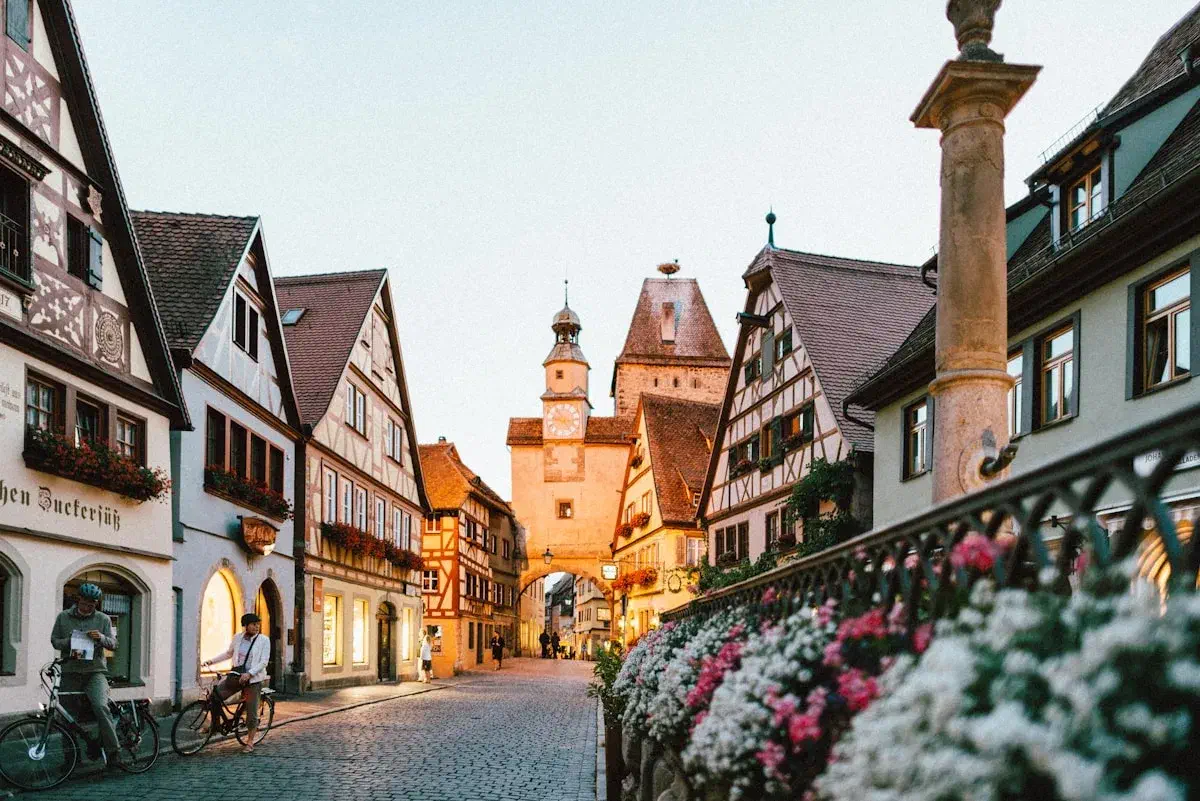
*   **Rothenburg ob der Tauber** ([Google Maps](https://www.google.com/maps/search/Rothenburg+ob+der+Tauber+Germany)): A perfectly preserved medieval town with intact city walls, cobblestone streets, and charming half-timbered houses.
*   **Füssen** ([Google Maps](https://www.google.com/maps/search/Füssen+Germany)): The gateway to Neuschwanstein and Hohenschwangau castles.
*   **Augsburg** ([Google Maps](https://www.google.com/maps/search/Augsburg+Germany)): A historic city with Roman roots and Renaissance influences.
*   **Lindau** ([Google Maps](https://www.google.com/maps/search/Lindau+Germany)): A picturesque island town on Lake Constance.

*Personal Observation:* Driving the Romantic Road felt like stepping into a storybook. Rothenburg ob der Tauber was particularly enchanting, with its ancient walls and the feeling of time standing still. We spent hours just wandering, soaking in the atmosphere, and imagining life centuries ago.

### Turkish Delights: A Comparative Perspective

While this article leans towards the German experience, it's crucial to acknowledge what Turkey offers exceptionally well, especially in contrast:

*   **Istanbul's Grand Bazaar** ([Google Maps](https://www.google.com/maps/search/Grand+Bazaar+Istanbul)): An overwhelming, vibrant labyrinth of shops selling everything from carpets and ceramics to spices and jewelry.
*   **Hagia Sophia** ([Google Maps](https://www.google.com/maps/search/Hagia+Sophia+Istanbul)): A historical marvel that has served as a church, mosque, and museum, showcasing centuries of architectural and religious fusion.
*   **Cappadocia's Fairy Chimneys** ([Google Maps](https://www.google.com/maps/search/Cappadocia+Turkey)): Unique rock formations that can be explored by hot air balloon for a breathtaking sunrise view.
*   **Ephesus Ancient City** ([Google Maps](https://www.google.com/maps/search/Ephesus+Ancient+City+Turkey)): One of the best-preserved ancient Roman cities in the Mediterranean.

These Turkish sites offer a distinct historical and cultural depth, often characterized by a more direct and engaging visitor experience than some of the more curated German attractions.

---

## Where to Eat

Exploring the culinary landscape is a vital part of any travel experience. Both Germany and Turkey offer distinct gastronomic journeys.

### German Cuisine: Hearty and Diverse

German food is often characterized by its hearty, comforting nature, with regional variations offering a rich tapestry of flavors.

1.  **Hofbräuhaus München** ([Google Maps](https://www.google.com/maps/search/Hofbräuhaus+München)): A legendary Bavarian beer hall in Munich offering traditional dishes and a lively atmosphere.
    *   **Cuisine:** Bavarian, German
    *   **Price Range:** €€
    *   **Why Recommend:** An iconic experience for authentic Bavarian food like Schweinshaxe (pork knuckle) and Weißwurst (white sausage), paired with their famous beers. The atmosphere is electric, filled with music and convivial chatter.

2.  **Vapiano**: A popular chain offering fresh, made-to-order Italian dishes in a casual, modern setting.
    *   **Cuisine:** Italian
    *   **Price Range:** €€
    *   **Why Recommend:** Great for a quick, fresh meal. You can customize your pasta, pizza, and salads with a wide variety of ingredients. They have locations in many major German cities.

3.  **Curry 36** ([Google Maps](https://www.google.com/maps/search/Curry+36+Berlin)): A world-famous Currywurst stand in Berlin.
    *   **Cuisine:** German Fast Food
    *   **Price Range:** €
    *   **Why Recommend:** A quintessential Berlin street food experience. Their Currywurst is legendary, served with a special sauce and fries. Expect a queue, but it's worth the wait for a true taste of Berlin.

4.  **Lutter & Wegner** ([Google Maps](https://www.google.com/maps/search/Lutter+Wegner+Berlin)): A historic restaurant in Berlin known for its excellent German cuisine and extensive wine list.
    *   **Cuisine:** German, Austrian
    *   **Price Range:** €€€
    *   **Why Recommend:** Offers a more refined dining experience with classic dishes like Wiener Schnitzel and Rouladen. It’s a great place to experience traditional German fine dining.

### Must-Try Local Delicacies in Germany

| Dish             | Description                                                               | Approximate Price (EUR) |
| :--------------- | :------------------------------------------------------------------------ | :---------------------- |
| **Currywurst**   | Pork sausage, chopped and seasoned with curry ketchup, often served with fries. | 4-7                     |
| **Schnitzel**    | Thinly pounded meat (usually pork or veal), breaded and fried.            | 12-20                   |
| **Bratwurst**    | A type of German sausage, typically grilled or pan-fried.                 | 5-10                    |
| **Schweinshaxe** | Roasted pork knuckle, known for its crispy skin and tender meat.           | 15-25                   |
| **Spätzle**      | A type of soft egg noodle, often served as a side dish or main course.    | 7-15                    |
| **Käsespätzle** | Spätzle mixed with cheese and topped with fried onions.                   | 9-16                    |
| **Black Forest Cake (Schwarzwälder Kirschtorte)** | A layered chocolate sponge cake with cherries, whipped cream, and Kirschwasser. | 4-7 (per slice)         |

### Turkish Cuisine: A Feast for the Senses

Turkish cuisine is renowned for its rich flavors, fresh ingredients, and diverse influences.

1.  **Çiya Sofrası** ([Google Maps](https://www.google.com/maps/search/Çiya+Sofrası+Istanbul)): A celebrated restaurant in Istanbul focusing on authentic, regional Anatolian dishes.
    *   **Cuisine:** Turkish, Regional Anatolian
    *   **Price Range:** €€
    *   **Why Recommend:** Offers a constantly changing menu of lesser-known but incredibly delicious traditional recipes. It's a culinary journey through Turkey's diverse food heritage.

2.  **Nusr-Et Steakhouse** ([Google Maps](https://www.google.com/maps/search/Nusr-Et+Steakhouse+Istanbul)): Famous for its high-quality steaks and theatrical presentation.
    *   **Cuisine:** Steakhouse, Turkish
    *   **Price Range:** €€€€
    *   **Why Recommend:** While expensive, it's known for its premium cuts of meat and unique dining experience, especially popular among international visitors.

3.  **Buhara Ocakbasi Restaurant** ([Google Maps](https://www.google.com/maps/search/Buhara+Ocakbasi+Restaurant+Istanbul)): A popular spot for traditional Turkish kebabs and grilled meats.
    *   **Cuisine:** Turkish, Kebab
    *   **Price Range:** €€
    *   **Why Recommend:** Offers a wide variety of succulent kebabs cooked over charcoal, served with fresh salads and bread. It's a classic choice for experiencing Turkish grilled specialties.

4.  **Mandabatmaz Turkish Coffee** ([Google Maps](https://www.google.com/maps/search/Mandabatmaz+Turkish+Coffee+Istanbul)): A tiny, iconic spot famous for its exceptionally well-made Turkish coffee.
    *   **Cuisine:** Turkish Coffee House
    *   **Price Range:** €
    *   **Why Recommend:** If you want to experience the authentic ritual and rich flavor of Turkish coffee, this is the place. It’s a simple yet profound experience.

### Must-Try Local Delicacies in Turkey

| Dish                | Description                                                                                             | Approximate Price (TRY/EUR) |
| :------------------ | :------------------------------------------------------------------------------------------------------ | :-------------------------- |
| **Kebab**           | Various grilled or roasted meat dishes (e.g., Adana, Urfa, Shish).                                      | 150-400 TRY / €5-12         |
| **Meze**            | A selection of small appetizers, similar to tapas, often served before the main course.                 | 50-150 TRY / €2-5 (per dish) |
| **Baklava**         | A sweet pastry made of layers of filo dough filled with chopped nuts and sweetened with syrup or honey. | 50-100 TRY / €2-3 (per slice)|
| **Turkish Breakfast (Kahvaltı)** | A lavish spread including cheeses, olives, eggs, tomatoes, cucumbers, honey, jam, and bread. | 150-300 TRY / €5-10         |
| **Pide**            | Turkish flatbread baked with various toppings, similar to pizza.                                        | 100-250 TRY / €3-8          |
| **Döner Kebab**     | Meat cooked on a vertical rotisserie, shaved off and typically served in bread or with rice.            | 100-200 TRY / €3-6          |
| **Turkish Coffee**  | Finely ground coffee, brewed in a special pot (cezve), resulting in a strong, rich brew.               | 30-50 TRY / €1-2            |

---

## Accommodation

Choosing the right place to stay can significantly impact your experience. Here's a look at accommodation options in Germany, with a comparative perspective on what Turkey might offer.

### Germany: Options for Every Budget

Germany offers a wide range of accommodation, from budget-friendly hostels to luxurious hotels and practical apartments.

1.  **Budget: Generator Hostels**
    *   **Location:** Multiple locations in major cities like Berlin, Hamburg, Munich.
    *   **Price Range:** €25-€50 per night (dorm bed)
    *   **Description:** These are modern, vibrant hostels offering both dormitories and private rooms. They often have communal areas, bars, and organize social events, making them great for solo travelers or those on a budget looking to meet people.

2.  **Mid-Range: Motel One**
    *   **Location:** Widespread across Germany in city centers.
    *   **Price Range:** €80-€150 per night
    *   **Description:** Motel One offers stylish, comfortable, and consistently good-value rooms. They focus on a clean, modern design and convenient city locations, perfect for business travelers or tourists who appreciate reliability.

3.  **Upper Mid-Range/Boutique: Michelberger Hotel Berlin** ([Google Maps](https://www.google.com/maps/search/Michelberger+Hotel+Berlin))
    *   **Location:** Friedrichshain, Berlin
    *   **Price Range:** €120-€200 per night
    *   **Description:** A trendy and unique hotel with a focus on art, music, and community. It offers a mix of room types, including quirky suites and communal spaces, creating a lively and inspiring atmosphere.

4.  **Luxury: Bayerischer Hof, Munich** ([Google Maps](https://www.google.com/maps/search/Bayerischer+Hof+Munich)) | [Booking.com](https://www.booking.com/search.html?ss=Bayerischer+Hof+Munich)
    *   **Location:** City center, Munich
    *   **Price Range:** €300+ per night
    *   **Description:** A grand, historic luxury hotel offering opulent rooms, fine dining, a renowned spa, and exceptional service. It's situated in a prime location, making it ideal for those seeking a premium experience.

5.  **Apartment Rental: FeWo-direkt (HomeAway/VRBO)**
    *   **Location:** Available across Germany.
    *   **Price Range:** Varies greatly (€70-€250+ per night for a 1-bedroom apartment)
    *   **Description:** For longer stays or families, renting an apartment through platforms like FeWo-direkt offers more space, a kitchen, and a feel of living like a local. It can be more cost-effective for groups.

### Where to Stay in Germany: Key Considerations

*   **City Centers:** Offer convenience for sightseeing, dining, and nightlife but can be more expensive and noisier.
*   **Quartiers/Neighborhoods:** Exploring different neighborhoods can provide a more authentic local experience. For example, in Berlin, Prenzlauer Berg offers a family-friendly vibe, while Kreuzberg is known for its alternative scene.
*   **Proximity to Public Transport:** Germany has an excellent public transport system. Staying near a U-Bahn (subway), S-Bahn (urban rail), or tram station is highly recommended for easy city navigation.

### Comparative Accommodation in Turkey

While Germany excels in standardized quality and efficient booking systems, **Turkey** offers a unique charm in its accommodation:

*   **Boutique Hotels in Historic Buildings:** Istanbul, in particular, has many charming boutique hotels converted from old Ottoman mansions or historical buildings, offering character and atmosphere.
*   **Guesthouses (Pansiyon):** Especially in coastal or rural areas, simple, family-run guesthouses offer a warm, personal touch and a more local experience at affordable prices.
*   **Luxury Resorts:** The Turkish Riviera boasts world-class luxury resorts offering all-inclusive packages and stunning sea views.
*   **Varying Service Standards:** While luxury hotels maintain high international standards, service in smaller establishments can be more variable, often characterized by genuine hospitality rather than polished efficiency. Booking platforms are widely used, but direct communication might sometimes yield better results or personal touches.

---

## Getting There & Getting Around

Navigating Germany and its transport systems is a highlight of the expat experience.

### Getting to Germany

*   **By Air:** Germany has major international airports in **Frankfurt (FRA)** ([Google Maps](https://www.google.com/maps/search/Frankfurt+Airport+Germany)), **Munich (MUC)** ([Google Maps](https://www.google.com/maps/search/Munich+Airport+Germany)), Berlin (BER), and Düsseldorf (DUS). These airports are well-connected to global destinations.
    *   **From Istanbul (IST) to Frankfurt (FRA):** Approx. 3 hours flight, ~€100-€250 (economy, depending on booking time).
    *   **From Istanbul (IST) to Munich (MUC):** Approx. 2.5 hours flight, ~€90-€230.
    *   **From New York (JFK) to Frankfurt (FRA):** Approx. 8 hours flight, ~€500-€1000+.
*   **By Train:** For travel within Europe, high-speed trains are an excellent option. Services connect cities like Paris, Amsterdam, and Vienna to major German hubs.
    *   **From Paris to Frankfurt:** Approx. 3.5-4 hours, ~€60-€150.
*   **By Bus:** FlixBus is a popular and affordable option for intercity and international travel within Europe.
    *   **From Prague to Munich:** Approx. 5-6 hours, ~€20-€40.

### Getting Around Germany

Germany boasts one of the most efficient and comprehensive public transportation networks in the world.

*   **Deutsche Bahn (DB):** The national railway company operates a vast network of trains, including:
    *   **ICE (Intercity-Express):** High-speed trains connecting major cities.
    *   **IC/EC (Intercity/Eurocity):** Slower but still efficient long-distance trains.
    *   **Regional Trains (RE/RB):** Connect smaller towns and cities.
    *   **Price Table (Approximate):**
        | Route                      | Train Type | Duration | Approximate Cost (EUR) |
        | :------------------------- | :--------- | :------- | :--------------------- |
        | Munich to Berlin           | ICE        | 4 hours  | €70-€150               |
        | Hamburg to Cologne         | ICE        | 3.5 hours| €50-€120               |
        | Stuttgart to Frankfurt     | ICE/IC     | 1.5-2 hours | €30-€70                |

*   **Deutschlandticket:** This revolutionary **€49 monthly public transport ticket** is valid on almost all local and regional public transport across Germany. This includes U-Bahns, S-Bahns, trams, buses, and most regional trains (RE, RB). **It is NOT valid on high-speed ICE/IC/EC trains.** This ticket is a game-changer for day trips and local travel.
    *   **Deutschlandticket Day Trips from Munich:** You can use your Deutschlandticket for fantastic day trips to places like **Salzburg** ([Google Maps](https://www.google.com/maps/search/Salzburg+Austria)) (approx. 1.5 hours by regional train), **Augsburg** ([Google Maps](https://www.google.com/maps/search/Augsburg+Germany)) (approx. 35 mins by regional train), **Lindau** ([Google Maps](https://www.google.com/maps/search/Lindau+Germany)) on Lake Constance (approx. 2 hours by regional train), and many more picturesque towns.

*   **City Public Transport:** Major cities have extensive networks of:
    *   **U-Bahn (Subway):** Fast and efficient for inner-city travel.
    *   **S-Bahn (Urban Rail):** Connects the city center with suburbs and surrounding areas.
    *   **Trams and Buses:** Cover areas not reached by rail.
    *   **Tickets:** A single ticket for one zone typically costs €2-€3. Day tickets and weekly passes are often more economical for extensive city exploration.

*   **Cycling:** Many German cities are very bike-friendly, with dedicated lanes and bike-sharing schemes. It's a popular and healthy way to get around, especially in cities like Münster and Freiburg.

*   **Car Rental:** Available at airports and major train stations, but often unnecessary within cities due to excellent public transport. Useful for exploring rural areas or the Romantic Road.

### Getting Around Turkey (Comparative Note)

*   **Intercity Buses:** Turkey has an extensive and affordable bus network connecting almost every town and city. Companies like Kamil Koç and Metro Turizm are popular.
*   **High-Speed Trains:** Available between major cities like Istanbul, Ankara, and Eskişehir, offering a comfortable and efficient way to travel.
*   **Domestic Flights:** Given the country's size, flying between major cities like Istanbul and Antalya or Izmir is often the fastest option.
*   **Istanbul Metro & Tram:** Istanbul has a rapidly expanding public transport system, including metros, trams, and ferries, essential for navigating the sprawling city.

---

## Our Experience

Our journey between Turkey and Germany has been a profound exploration of two vastly different, yet equally compelling, ways of life. It's a comparison that has evolved from initial impressions to a deep understanding of what each country offers, and what truly matters to us as a family.

When we first considered moving, the decision felt monumental. Leaving behind the familiar warmth, the vibrant social tapestry, and the deeply ingrained cultural nuances of Turkey was a challenge. We were drawn to Germany by promises of stability, a structured environment for raising our child, and a perceived higher quality of life in terms of infrastructure and social services.

**What We Loved About Germany:**

The **predictability and reliability** of German systems were immediately striking. From the punctuality of public transport to the clarity of administrative processes (even if sometimes complex!), there was a sense of order that fostered a feeling of security. The **emphasis on children's well-being** was palpable. The parks are safe and well-maintained, the childcare system (Kita) is structured and accessible, and the general attitude towards families is one of inclusion. We found that being able to plan our lives with a reasonable degree of certainty – knowing that our work rights were protected, that our healthcare was dependable, and that the environment was clean – provided a significant peace of mind. The **access to nature** is also incredible; weekend trips to the Alps or simply enjoying the countless green spaces within cities like Munich offered a constant connection to the outdoors.

*   **Site Link:** Our experience renting an apartment in Munich, detailed in [Renting an Apartment in Germany | The Reality of Finding Housing in Munich (2026)](https://lebeninsider.com/en/germany/expat/renting-in-germany-munich/), was a testament to the city's livability, despite its challenges.

**What We Missed About Turkey:**

Conversely, the transition highlighted aspects of Turkish life we hadn't fully appreciated. The **spontaneous human warmth and deep social connections** are unique. In Turkey, hospitality is not just a gesture; it's a way of life. The ease with which we could connect with people, the extended family gatherings, and the general effervescence of social interactions are things that cannot be easily replicated. The **food culture** in Turkey is simply on another level. The freshness, variety, and sheer joy of eating in Turkey are something we still yearn for. Every meal felt like a celebration.

*   **Site Link:** Our detailed comparisons, such as [Food and Eating Out: Turkey vs Germany](https://lebeninsider.com/en/germany/living/food-turkey-vs-germany/) and [Social Life and Making Friends: Turkey vs Germany](https://lebeninsider.com/en/germany/living/social-life-turkey-vs-germany/), capture these feelings more vividly.

**Navigating the Nuances:**

The experience of moving countries is rarely black and white. Germany's efficiency can sometimes feel impersonal. The language barrier, while surmountable, remains a constant challenge that can hinder deep connections. Bureaucracy, though structured, can be frustratingly slow and requires a meticulous approach. On the other hand, Turkey's vibrancy, while exhilarating, can also feel chaotic. The unpredictability in some systems, the less structured approach to certain services, and the economic fluctuations present their own set of challenges.

**For Families and Children:**

As parents, our perspective is heavily influenced by our child's experience. Germany's focus on safety, education, and outdoor activities provides a nurturing environment. The *Kita* system, while different from Turkish childcare, offers structured learning and socialization. However, we sometimes miss the extended, multi-generational family involvement that is so common in Turkey.

*   **Site Link:** Our insights into [Childcare and the Kita System: Turkey vs Germany](https://lebeninsider.com/en/germany/living/kita-childcare-turkey-vs-germany/) and [Primary School: Turkey vs Germany](https://lebeninsider.com/en/germany/living/primary-school-turkey-vs-germany/) delve into these differences.

**The Verdict for Us:**

Ultimately, the decision to live in Germany was driven by a desire for a stable foundation for our family's future. The security, the quality of education and healthcare, and the overall predictability of life here have proven invaluable. However, we carry our Turkish roots with us – the language, the cultural values, the love for our homeland, and the cherished memories. It's not about choosing one country over the other as "better," but about identifying which country best serves our needs at this stage of our lives. Germany provides the structure and opportunities we sought, while Turkey remains the wellspring of our identity and cherished connections.

*   **Site Link:** This journey is further explored in [Why I Left Turkey: The Decision That Changed Everything](https://lebeninsider.com/en/germany/living/why-i-moved-countries/) and the overarching comparison in [Turkey vs Germany: An Honest Comparison After Making the Move](https://lebeninsider.com/en/germany/living/turkey-vs-germany/).

---

## Frequently Asked Questions

**1. Is it difficult to find a job in Germany if I don't speak German?**
While it's possible to find jobs in Germany without fluent German, especially in highly in-demand sectors like IT, engineering, and research, knowing German significantly broadens your opportunities and eases daily life. Many companies operate in English, but proficiency in German is often a strong advantage and sometimes a requirement for client-facing roles or in more traditional industries.

**2. How is the healthcare system in Germany compared to Turkey?**
Germany has a universal, high-quality healthcare system funded through mandatory contributions from employees and employers. It's known for its excellent medical facilities, highly trained professionals, and short waiting times for specialized treatments. Turkey also has a universal healthcare system, which has seen significant improvements in recent years, with many modern hospitals, especially in larger cities. However, the German system is generally considered more advanced and comprehensive, particularly for specialized care and access to cutting-edge treatments.

**3. What is the general cost of living in Germany versus Turkey?**
The cost of living in Germany is generally higher than in Turkey, especially in major cities like Munich or Berlin, where rent can be a significant expense. Groceries, utilities, and public transportation are also typically more expensive in Germany. However, salaries and wages are generally higher in Germany, which can offset the increased cost of living, especially in terms of purchasing power for essential goods and services.

**4. How safe is it to live in Germany for expats, particularly those from minority backgrounds?**
Germany is generally a very safe country with low crime rates. Most expats report feeling secure. However, like any country, it faces challenges with occasional xenophobia and discrimination. Muslim expats, for instance, may encounter specific cultural or social biases, as discussed in [Being Turkish and Muslim in Germany: What It Is Actually Like](https://lebeninsider.com/en/germany/living/turkish-muslim-identity-germany/). It's important to be aware of potential challenges while also recognizing that many expats live fulfilling and integrated lives.

**5. What is the best time of year to visit Germany?**
The best times to visit Germany depend on your preferences. **Summer (June to August)** offers warm weather, ideal for outdoor activities and festivals, but it's also the peak tourist season. **Spring (April to May)** and **Autumn (September to October)** provide pleasant temperatures, beautiful scenery with blooming flowers or autumn colors, and fewer crowds. **Winter (November to March)** is magical for Christmas markets and skiing, but days are short and cold.

**6. Is it easy to make friends in Germany as an expat?**
Making deep friendships in Germany can take time and effort. Germans are often more reserved initially compared to people in cultures like Turkey. However, being proactive, joining clubs or sports teams, participating in expat meetups, and attending language exchange events can significantly help. The key is persistence and a willingness to bridge cultural differences.

---

### Tags
`#TurkeyVsGermany` `#QualityOfLife` `#ExpatLife` `#LivingInGermany` `#LivingInTurkey` `#CountryComparison` `#Happiness` `#FamilyLife` `#Germany` `#Turkey` `#ExpatDecision` `#MoveAbroad` `#CulturalDifferences` `#Munich` `#Istanbul` `#TravelGermany` `#TravelTurkey` `#ShareHubEU`

---
*This article is the culmination of the Turkey vs Germany series, offering a final verdict on quality of life and happiness.*
- [Back to series overview](/en/germany/living/turkey-vs-germany/)
- [Why I moved countries](/en/germany/living/why-i-moved-countries/)
- [Trust in Germany](/en/germany/living/trust-in-germany/)
- [Renting an Apartment in Germany | The Reality of Finding Housing in Munich (2026)](https://lebeninsider.com/en/germany/expat/renting-in-germany-munich/)
- [Being Turkish and Muslim in Germany: What It Is Actually Like](https://lebeninsider.com/en/germany/living/turkish-muslim-identity-germany/)
- [Food and Eating Out: Turkey vs Germany](https://lebeninsider.com/en/germany/living/food-turkey-vs-germany/)
- [Social Life and Making Friends: Turkey vs Germany](https://lebeninsider.com/en/germany/living/social-life-turkey-vs-germany/)
- [Childcare and the Kita System: Turkey vs Germany](https://lebeninsider.com/en/germany/living/kita-childcare-turkey-vs-germany/)
- [Primary School: Turkey vs Germany](https://lebeninsider.com/en/germany/living/primary-school-turkey-vs-germany/)