
## About the Destination

This article delves into a fascinating comparison of car ownership and traffic culture between Turkey and Germany, two countries with vastly different approaches to road usage and safety. While the core of this comparison will focus on the driving experiences, it's important to situate these observations within the broader context of life in these nations. Germany, a large federal republic in Central Europe, boasts a population of approximately 83 million people. Its capital, Berlin, is a major European hub, but this comparison will draw heavily on experiences in Munich, a vibrant city in Bavaria, southern Germany. Turkey, a transcontinental country straddling Eastern Europe and Western Asia, has a population exceeding 85 million, with its largest city, Istanbul, being a sprawling metropolis that bridges continents.

The historical trajectories of these nations have shaped their infrastructure and societal norms significantly. Germany, with its long industrial history and post-war economic boom, has invested heavily in its transportation networks, including the renowned Autobahn system. Turkey, while also experiencing periods of rapid modernization, has a more complex development path, with infrastructure improvements often concentrated in urban centers like Istanbul.

When considering the distance from major centers, Munich serves as a key reference point for Germany. It is approximately 585 kilometers (364 miles) southwest of Berlin, a journey typically taking around 6-7 hours by car or high-speed train. Istanbul, on the other hand, is a city of immense scale and density. Traveling within Istanbul itself can be a significant undertaking, with commutes taking hours due to its size and traffic congestion. For context, driving from Istanbul to Ankara, Turkey's capital, is roughly 450 kilometers (280 miles), taking about 4.5-5 hours.

The character of Munich, and by extension Germany, is one of order, efficiency, and a deep respect for rules. The atmosphere is generally calm and organized, even in bustling city centers. People tend to be reserved but polite, valuing punctuality and precision. You'll find a high degree of public trust, where citizens often assume others will adhere to regulations. This translates into a predictable environment where infrastructure is well-maintained, and services generally function smoothly. The air is often crisp, especially outside the immediate urban core, and the changing seasons are distinct, from snowy winters to warm summers.

In contrast, Turkey, and particularly Istanbul, is characterized by vibrant energy, a strong sense of community, and a more fluid approach to life. The atmosphere is often lively and boisterous, with a culture that emphasizes social interaction and hospitality. People are generally warm and expressive, and there’s a sense of improvisation and adaptability that permeates daily life. While this can be incredibly engaging, it also means that systems and routines can be less predictable. Infrastructure development is ongoing, and while major cities are modernizing rapidly, you might encounter more variation in road conditions and public services compared to Germany. The climate in much of Turkey is Mediterranean or continental, with hot summers and colder winters, depending on the region.

You should visit Germany for its unparalleled quality of life, its commitment to sustainability and efficiency, and its rich cultural heritage. It's a country where orderliness doesn't stifle enjoyment but rather enhances it, offering a safe, reliable, and comfortable environment for living and exploring. The meticulous planning that goes into everything from public transport to environmental regulations can be truly inspiring. You should visit Turkey for its captivating history, its delicious cuisine, and its incredibly warm and hospitable people. It's a land of contrasts, where ancient traditions meet modern aspirations, offering an experience that is both deeply enriching and wonderfully unpredictable.

## Places to Visit

### Munich

Munich, the capital of Bavaria, is a city that effortlessly blends tradition with modernity. It's renowned for its beautiful architecture, vibrant beer gardens, and proximity to the stunning Bavarian Alps. It's a city that invites exploration at a relaxed pace, allowing visitors to truly soak in its unique charm.

### Marienplatz and the Neues Rathaus

The heart of Munich, **Marienplatz** ([Google Maps](https://www.google.com/maps/search/Marienplatz+Munich)), is a bustling square dominated by the magnificent **Neues Rathaus** (New Town Hall). This neo-Gothic masterpiece is famous for its intricate Glockenspiel, a mechanical clock that puts on a show with animated figures depicting historical Bavarian events twice a day. Watching the Glockenspiel is a quintessential Munich experience, especially at midday. We found ourselves captivated by the detailed craftsmanship and the sheer joy of the crowds gathered below.

### Frauenkirche (Cathedral of Our Lady)

The iconic twin-domed **Frauenkirche** ([Google Maps](https://www.google.com/maps/search/Frauenkirche+Munich)), also known as the Cathedral of Our Lady, is a symbol of Munich. Its distinctive silhouette is visible from afar. Inside, the atmosphere is serene, with impressive architecture and a legendary "devil's footprint" near the entrance. Climbing one of the towers (when open) offers breathtaking panoramic views of the city and, on clear days, the Alps.

### Viktualienmarkt

A vibrant open-air market, **Viktualienmarkt** ([Google Maps](https://www.google.com/maps/search/Viktualienmarkt+Munich)), is a feast for the senses. Here, you can find everything from fresh produce and local delicacies to flowers and souvenirs. It’s the perfect place to grab a bite, sample regional specialties, and soak up the lively atmosphere. We spent a delightful afternoon here, enjoying a pretzel and some local cheese.

### Englischer Garten

One of the world's largest urban parks, the **Englischer Garten** ([Google Maps](https://www.google.com/maps/search/Englischer+Garten+Munich)) is an oasis of green in the heart of the city. It features a Japanese pagoda, a Chinese tower, a lake with a boat rental, and even a surfing spot on an artificial river wave (Eisbachwelle). It’s a fantastic place for a leisurely stroll, a picnic, or simply to relax and people-watch.

### Hofbräuhaus München

No visit to Munich is complete without experiencing the world-famous **Hofbräuhaus München** ([Google Maps](https://www.google.com/maps/search/Hofbräuhaus+München)). This historic beer hall offers a traditional Bavarian experience with hearty food, massive steins of beer, and lively Oompah music. It’s a true cultural institution and a must-visit for anyone wanting to taste authentic Bavarian hospitality.

### Deutsches Museum

For science and technology enthusiasts, the **Deutsches Museum** ([Google Maps](https://www.google.com/maps/search/Deutsches+Museum+Munich)) is a treasure trove. It's one of the oldest and largest science and technology museums in the world, with an incredible array of exhibits spanning from mining and aviation to astronomy and musical instruments. You could easily spend an entire day here.

### Residenz München

The former royal palace of the Bavarian monarchs, **Residenz München** ([Google Maps](https://www.google.com/maps/search/Residenz+München)), is a sprawling complex showcasing opulent state rooms, a treasury, and a beautiful courtyard theatre. It offers a glimpse into the lavish lifestyle of the Wittelsbach dynasty.

### Nymphenburg Palace

A stunning Baroque palace on the western outskirts of Munich, **Nymphenburg Palace** ([Google Maps](https://www.google.com/maps/search/Nymphenburg+Palace+Munich)) served as the summer residence of the Bavarian rulers. Its magnificent gardens, canals, and several smaller pavilions, including the charming Amalienburg hunting lodge, make it a worthwhile excursion.

### Olympiapark

Built for the 1972 Olympic Games, **Olympiapark** ([Google Maps](https://www.google.com/maps/search/Olympiapark+Munich)) offers a variety of attractions, including an iconic Olympic Tower with panoramic views, a stadium, and an aquatic center. It's a great place for outdoor activities and enjoying the city skyline.

### BMW Welt & Museum

For car enthusiasts, the **BMW Welt** ([Google Maps](https://www.google.com/maps/search/BMW+Welt+Munich)) and the adjacent **BMW Museum** ([Google Maps](https://www.google.com/maps/search/BMW+Museum+Munich)) are pilgrimage sites. BMW Welt is a futuristic exhibition and delivery center, while the museum chronicles the history of the iconic automotive brand.

### St. Peter's Church

**St. Peter's Church** ([Google Maps](https://www.google.com/maps/search/St.+Peter's+Church+Munich)), affectionately known as "Alter Peter" (Old Peter), is Munich's oldest parish church. Climbing its tower rewards you with some of the most spectacular views of Marienplatz and the city's rooftops. We found the ascent challenging but incredibly rewarding.

### Isar River

The **Isar River** ([Google Maps](https://www.google.com/maps/search/Isar+River+Munich)) flows through Munich and offers lovely spots for relaxation, picnics, and even swimming during warmer months. The riverbanks are popular with locals seeking a break from the city bustle.

## Where to Eat

Munich offers a diverse culinary scene, from traditional Bavarian fare to international cuisine.

*   **Hofbräuhaus München**: (Traditional Bavarian, €€) - A must-visit for authentic Bavarian dishes like Schweinshaxe (pork knuckle) and Weißwurst (white sausage), accompanied by their famous beer.
*   **Augustiner-Keller**: (Traditional Bavarian, €€) - Another historic beer hall offering a more relaxed atmosphere than Hofbräuhaus, with excellent traditional food and local brews.
*   **Tantris**: (Fine Dining, €€€€) - For a truly special occasion, Tantris offers exquisite Michelin-starred cuisine in an elegant setting.
*   **Haxnbauer im Scholastikahaus**: (Traditional Bavarian, €€) - Specializes in its namesake, Haxn (pork knuckles), roasted to crispy perfection.
*   **Viktualienmarkt Stalls**: (Various, €-€€) - Explore the market for a variety of street food options, from fresh pretzels and sausages to international snacks.

| Local Delicacy | Description | Approximate Price (EUR) |
|---|---|---|
| **Weißwurst** | Traditional Bavarian white sausage, typically eaten before noon with sweet mustard and a pretzel. | 3 - 5 |
| **Schweinshaxe** | Roasted pork knuckle, known for its crispy crackling and tender meat. | 15 - 20 |
| **Leberkäse** | A type of meatloaf, often served as a sandwich or a slice with potato salad. | 5 - 10 |
| **Brezn (Pretzel)** | A classic Bavarian baked knot, often salted and served with butter or sweet mustard. | 1.5 - 3 |
| **Käsespätzle** | Egg noodles mixed with cheese and topped with fried onions. | 8 - 12 |

## Accommodation

Munich offers a wide range of accommodation options to suit every budget.

*   **Budget:** **Wombat's City Hostel Munich Hauptbahnhof** ([Google Maps](https://www.google.com/maps/search/Wombat's+City+Hostel+Munich+Hauptbahnhof) | [Booking.com](https://www.booking.com/search.html?ss=Wombat's+City+Hostel+Munich+Hauptbahnhof)) - Located near the main train station, offering clean dorms and private rooms, with a great social atmosphere. (EUR 30 - 60 per night for a dorm bed).
*   **Mid-Range:** **Hotel Vier Jahreszeiten Kempinski München** ([Google Maps](https://www.google.com/maps/search/Hotel+Vier+Jahreszeiten+Kempinski+München) | [Booking.com](https://www.booking.com/search.html?ss=Hotel+Vier+Jahreszeiten+Kempinski+München)) - A classic luxury hotel in a prime location on Maximilianstrasse, offering elegant rooms and impeccable service. (EUR 180 - 300 per night).
*   **Luxury:** **The Charles Hotel, a Rocco Forte Hotel** ([Google Maps](https://www.google.com/maps/search/The+Charles+Hotel,+a+Rocco+Forte+Hotel+Munich) | [Booking.com](https://www.booking.com/search.html?ss=The+Charles+Hotel,+a+Rocco+Forte+Hotel+Munich)) - Situated near the Old Botanical Garden, this hotel boasts stylish rooms, a spa, and excellent dining options. (EUR 350+ per night).

**Where to Stay:** For first-time visitors, staying in or near the **Altstadt (Old Town)** provides easy access to major attractions and public transport. Areas like **Maxvorstadt** offer a more bohemian vibe with museums and university life, while **Schwabing** is known for its lively atmosphere and green spaces.

## Getting There & Getting Around

Munich is well-connected to major international hubs.

| Mode of Transport | From | To | Approximate Duration | Approximate Price (EUR) |
|---|---|---|---|---|
| **Flight** | Istanbul | Munich Airport (MUC) | 3.5 - 4 hours | 100 - 300 (depending on booking time and airline) |
| **Flight** | Frankfurt Airport (FRA) | Munich Airport (MUC) | 1 hour | 50 - 150 |
| **Train** | Berlin Hbf | München Hbf | 4 - 7 hours (ICE High-Speed Train) | 50 - 120 |
| **Train** | Frankfurt Hbf | München Hbf | 3.5 - 4 hours (ICE High-Speed Train) | 40 - 100 |
| **Bus** | Various European Cities | Munich ZOB (Central Bus Station) | Variable | 30 - 80 |

**Deutschlandticket:** Yes, the **Deutschlandticket** is valid for unlimited travel on all local and regional public transport (buses, trams, U-Bahn, S-Bahn) throughout Germany, including in Munich. This is an incredibly cost-effective option for exploring the city and surrounding areas.

**Getting Around Munich:** Munich boasts an excellent public transport system.
*   **S-Bahn (Suburban Rail):** Connects the city center with surrounding suburbs and the airport.
*   **U-Bahn (Underground/Metro):** A fast and efficient way to navigate the city.
*   **Trams & Buses:** Complement the S-Bahn and U-Bahn, reaching areas not covered by rail.
*   **Walking:** The city center is very walkable, with many attractions close to each other.
*   **Cycling:** Munich is a very bike-friendly city, with numerous bike paths and rental options.

## Our Experience

Our experience driving in Munich and comparing it to our driving days in Turkey was eye-opening. The most immediate difference was the sheer level of **discipline and predictability** on German roads. In Turkey, particularly Istanbul, driving often felt like a high-stakes game of improvisation. Horns were constantly used as a primary form of communication, lane discipline was a suggestion rather than a rule, and pedestrian crossings were often treated as mere decorative markings on the asphalt. We once witnessed a near-miss where a car swerved abruptly to avoid a pedestrian who had only just stepped onto the crossing, highlighting the constant need for hyper-vigilance.

In Munich, the contrast was stark. The adherence to lane discipline on the Autobahn was remarkable. Drivers used the left lanes exclusively for overtaking and moved over promptly. Signaling was consistent, and the concept of "giving way" was deeply ingrained. We remember a moment on the Autobahn where traffic slowed significantly, and everyone merged seamlessly and calmly without any aggressive maneuvers. The respect for pedestrian crossings was also a revelation; drivers would often stop well before the white lines, even if they saw you approaching from a distance. This created a profound sense of **safety and reduced stress** on the road.

The rigorous **TÜV vehicle inspection** in Germany also contributes significantly to road safety. We noticed that cars on German roads generally appeared well-maintained, with functioning lights and clean bodies, suggesting a higher standard of vehicle upkeep compared to what we sometimes observed in Turkey, where older vehicles with visible wear and tear were more common.

The **public transportation system in Munich** further diminished the need for a car. The efficiency and extensive coverage of the U-Bahn, S-Bahn, and tram network made it incredibly easy to get around the city without a vehicle. We found ourselves using our rental car less and less as we became accustomed to the convenience of public transport. This is a significant quality of life improvement that we hadn't fully anticipated.

For families with young children, the German approach to traffic and public transport is particularly beneficial. The well-maintained sidewalks, the numerous parks, and the child-friendly public transport options make navigating a city with a stroller or young children significantly less daunting than in many Turkish cities.

This comparison of traffic culture is just one facet of our broader exploration of life in Turkey versus Germany. We’ve also explored topics like **Housing and Renting** ([link to Housing and Renting: Turkey vs Germany]), the **Health System** ([link to Health System: Turkey vs Germany]), **Childcare and the Kita System** ([link to Childcare and the Kita System: Turkey vs Germany]), and the subtle yet profound differences in **Social Life and Making Friends** ([link to Social Life and Making Friends: Turkey vs Germany]). Each aspect reveals a unique cultural imprint that shapes daily life.

## Frequently Asked Questions

*   **Is it safe to drive in Munich?**
    Yes, driving in Munich is generally very safe due to strict traffic laws, well-maintained roads, and disciplined drivers. The public transport system is also excellent, making a car optional for most residents.

*   **What is the speed limit on the Autobahn?**
    While some sections of the Autobahn have no mandatory speed limit ("freie Fahrt"), there is a recommended speed limit of 130 km/h (81 mph). Many sections do have posted speed limits, and drivers must always be mindful of road conditions and traffic.

*   **How difficult is it to get a driver's license in Germany?**
    Obtaining a German driver's license can be a rigorous and expensive process, involving extensive theory lessons, practical driving lessons, and passing both theoretical and practical exams. It is designed to ensure a high standard of driving competence.

*   **Are there any specific driving etiquette rules in Germany?**
    Yes, key etiquette includes strict adherence to lane discipline (staying in the right lane unless overtaking), always signaling lane changes, yielding to traffic on the right at unmarked intersections, and respecting pedestrian crossings.

*   **What is the best time of year to visit Munich?**
    Spring (April-May) and early autumn (September-October) offer pleasant weather for sightseeing. Summer (June-August) is warm and lively, with many outdoor events, but can be crowded. Winter (November-March) is cold and snowy, perfect for Christmas markets and winter sports.

*   **How much does it cost to own a car in Germany?**
    Car ownership in Germany can be expensive, with costs including vehicle purchase, mandatory insurance (which is comprehensive and often expensive), annual road tax, regular TÜV inspections, fuel, and maintenance. Parking can also be a significant cost in urban areas.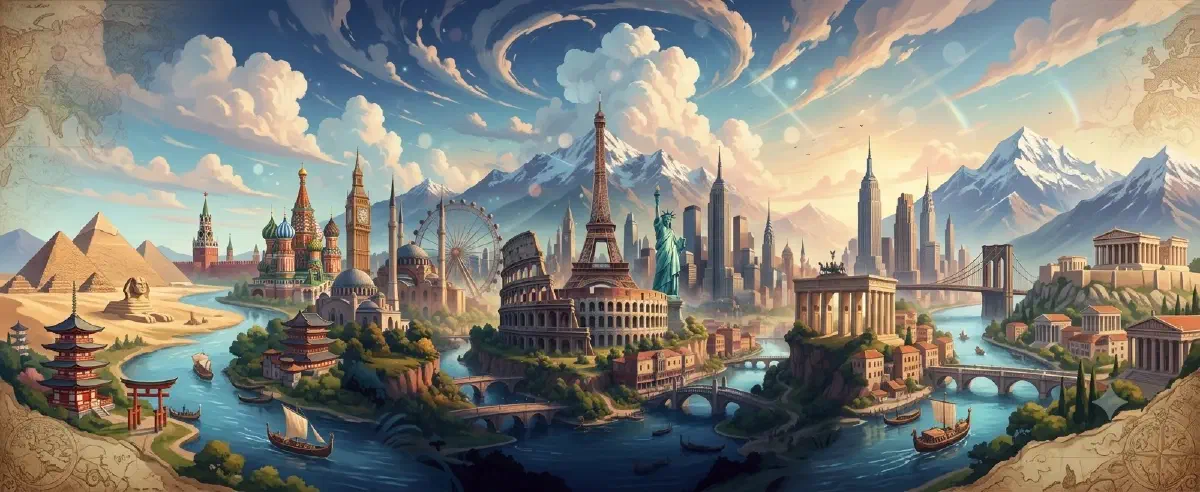
Cars and Traffic Culture: Turkey vs Germany
Related

Food and Eating Out: Turkey vs Germany
15 mins·
loading


Health System: Turkey vs Germany
10 mins·
loading